
Legacy Brands and the Art of Becoming More Themselves
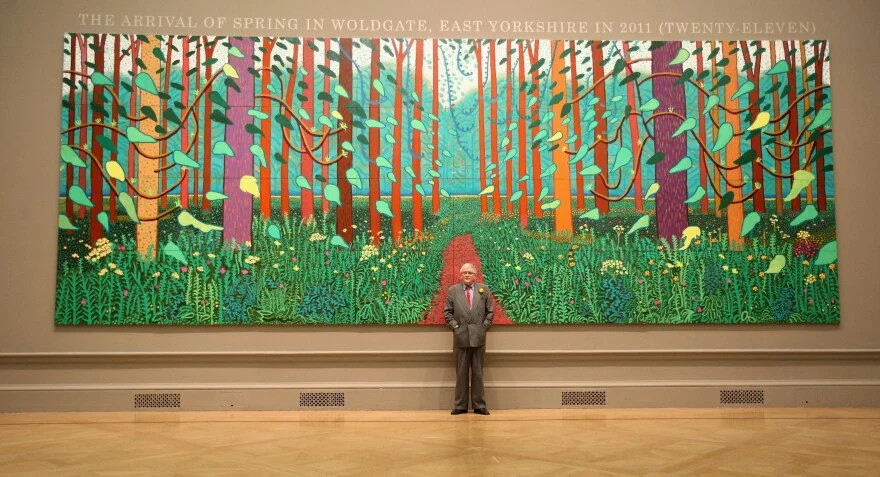
DAVID HOCKNEY, THE ARRIVAL OF SPRING, 2011
TL;DR: Staying true to yourself means growing further into what you already are, which is the only route forwards for a brand that has drifted.
Faced with the the need to breathe new life and vitality into a legacy brand invariably becomes a negotiation between the seemingly opposing demands of authenticity and change: how much do we dare change before we stop being ourselves? We treat change as a pressure that authenticity must somehow survive.
We usually speak of authenticity as a state. A brand is authentic or it is not; a person is true to themselves or false. The word arrives with a picture of something fixed, an original to be guarded against copies and corrosion, and the work of authenticity becomes the work of preservation. We talk of heritage, of brand guardians, of protecting the codes. Each phrase assumes that the authentic thing already exists, and that the job is to stop it being damaged or straying too far from it.
I want to suggest instead that authenticity is a process, and that the work of it is emergence: a self that comes out more fully as it is moved, tested and remade against a changing world.
Rather then wheel out the usual case studies (which is not to suggest they have nothing to teach us) I’ve reached for the artists before I go to brands. I’ve always found it strange that we talk about “creativity” so much and yet seem to make so little effort to learn from the biggest body of inspiration and knowledge that exists — namely the careers of artists. After all, an artist’s career is the longest record we have of managing a creative vision through time — which is surely the task of managing a brand.
The artists in this essay held on to something — an obsession, or a way of seeing — but pursued emergence, not preservation, allowing its expression to emerge more fully with each iteration. Each of the careers that follows shows a different part of how that is done: change that is forced on you, change the market does not expect, change after you have been written off, change through new tools and modes of expression. I will end in the boardroom, with Tom Ford and Jaguar, and with a brand I worked on myself. But the artists come first, because they got there first.
I hasten to add that am no art historian, and I will not pretend to be one. I know little about art, but I know what I like, and know too the difference between appreciation and knowledge. What follows is a strategist’s reading of these careers and I am sure a scholar would see more in each of them — and would no doubt correct me on my errors of reading and interpretation. So if you are one, please go easy on me.
Matisse: The medium changes, the self does not
I begin with my first love, and with the hardest case: change that was not chosen. In January 1941, Henri Matisse barely survived surgery for duodenal cancer — so nearly fatal that the nuns nursing him in Lyon nicknamed him le ressuscité: the man risen from the dead. “It’s like being given a second life,” he told his son Pierre. What followed was not the clean rupture of legend. He painted on, seated, through the 1940s; he designed an entire chapel at Vence, drawing with charcoal lashed to a bamboo pole from his bed.
Matisse had spent much of his artistic career championing the idea that the pleasures of the decorative were not superficial, but a channelling and manifestation of the essential vitality of life; a re-expression of nature’s rhythm. His life’s work had been devoted to finding a visual language that would transmit this joyful, harmonious and satisfying energy to the viewer.
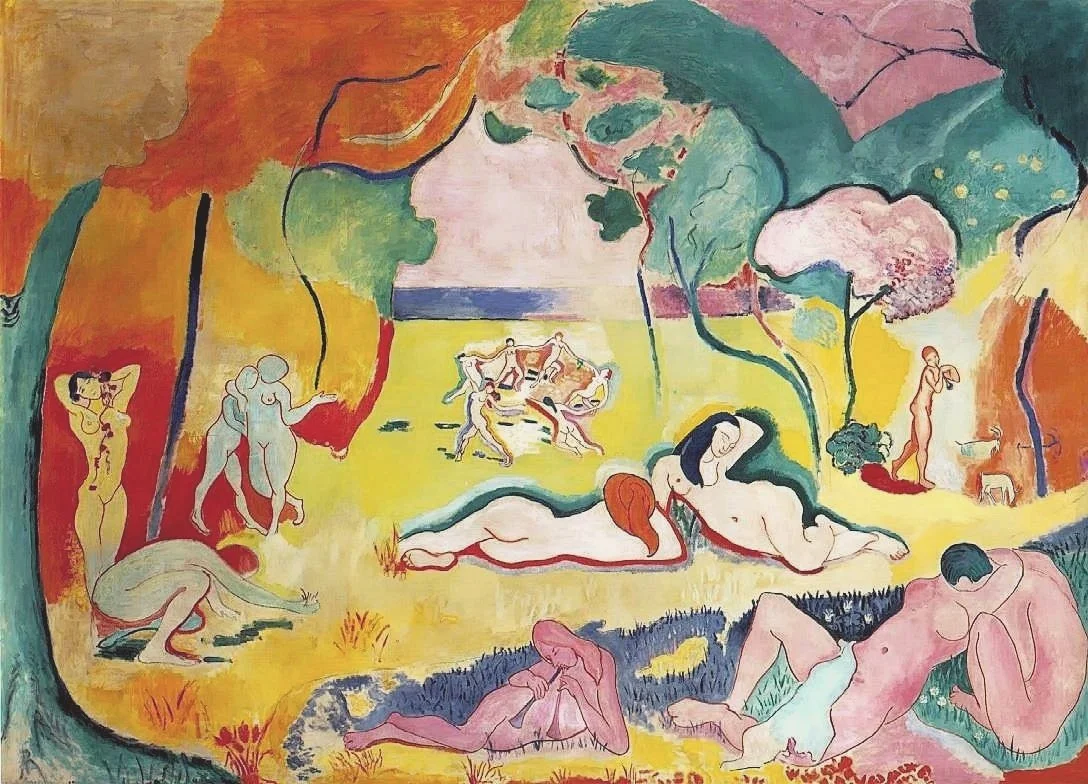
HENRI MATISSE, LE BONHEUR DE VIVRE (THE JOY OF LIFE), 1905–06
Only when painting finally became impossible did he commit wholly to cutting painted paper with shears — a technique he had used two decades earlier composing the Barnes Foundation’s Dance mural. The late turn was a return, and an elevation, and it is instructive to observe what continuity through evolution looks like in the works themselves.
In 1907 Matisse painted Blue Nude: Memory of Biskra — a single monumental figure, sculptural, confrontational, blue.
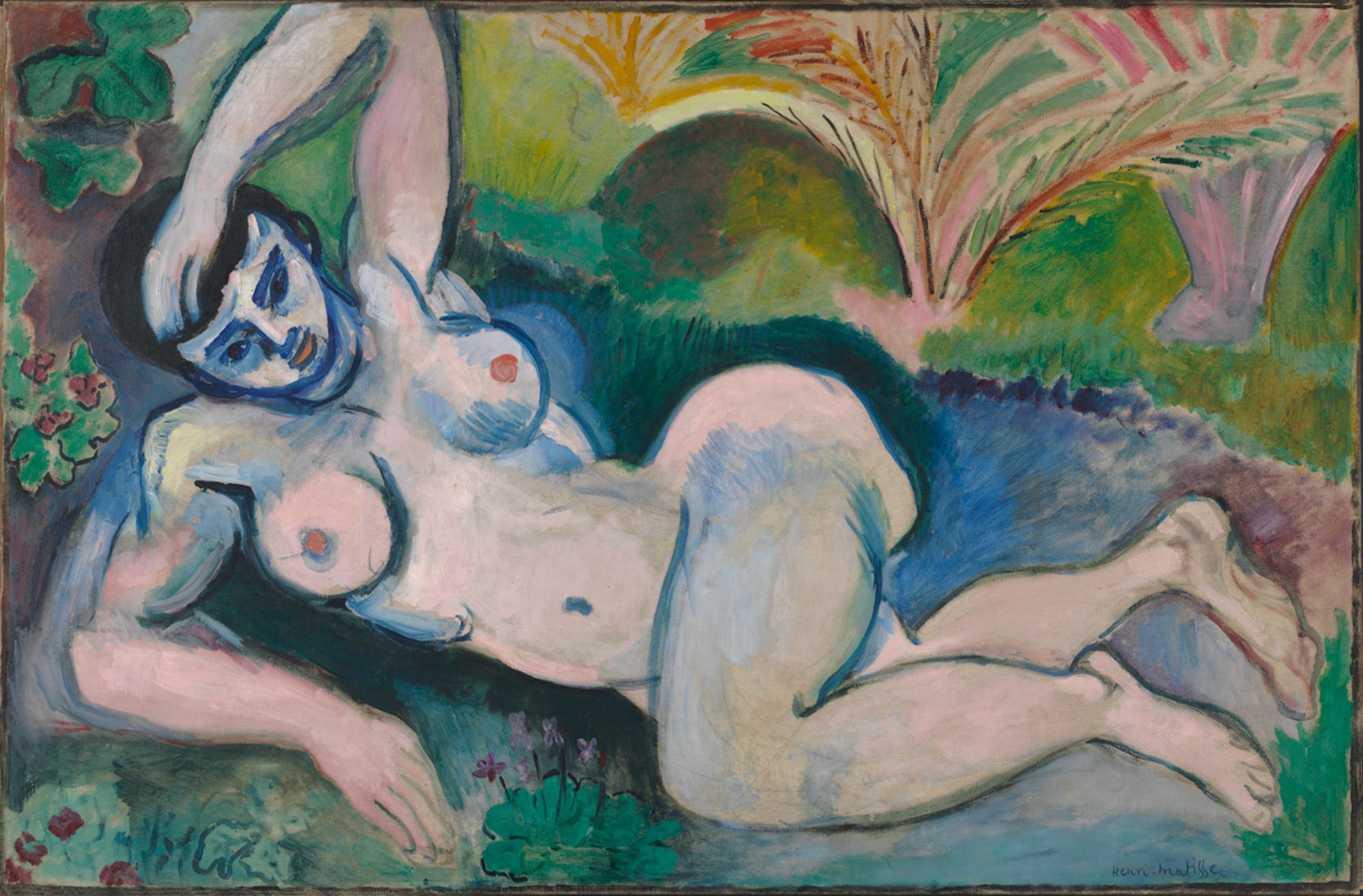
HENRI MATISSE, NU BLEU: SOUVENIR DE BISKRA (BLUE NUDE: MEMORY OF BISKRA), 1907
In 1952, forty-five years later, came the Blue Nudes: the same subject, the same name, the same sculptural conviction, rendered now in nothing but scissored paper and distilled to a silhouette.
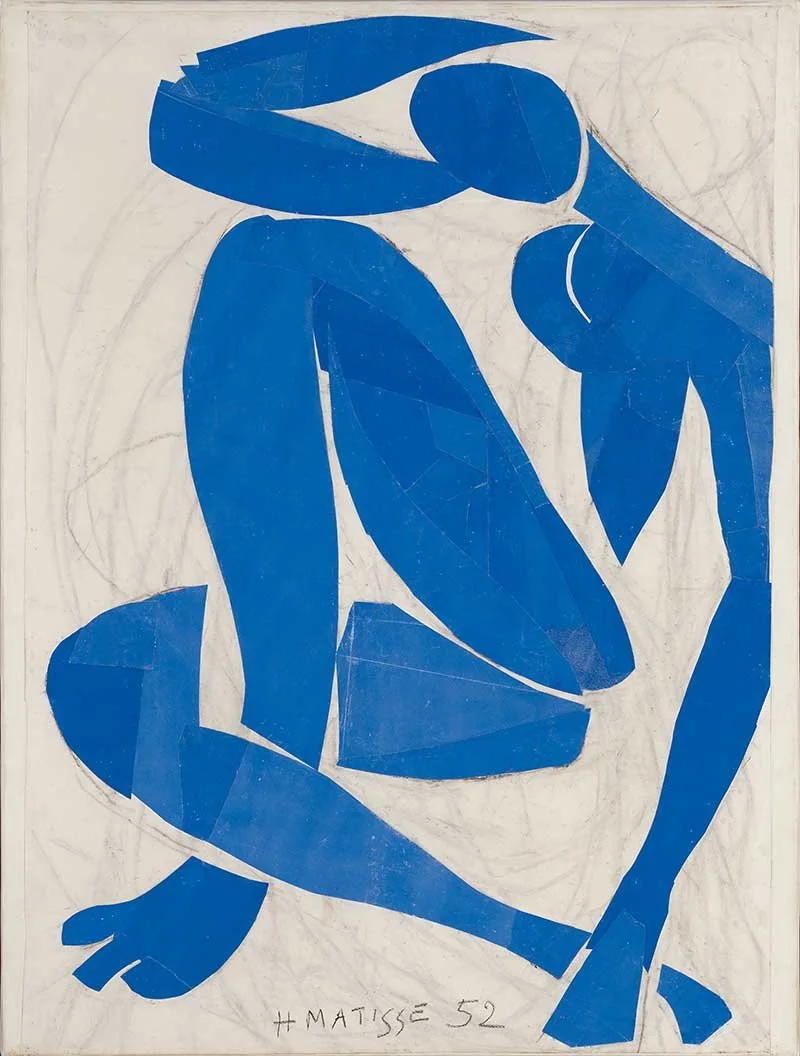
HENRI MATISSE, NU BLEU IV (BLUE NUDE IV), 1952
My favourite, The Snail of 1953 is a lifetime of colour construction reduced to its irreducible logic.
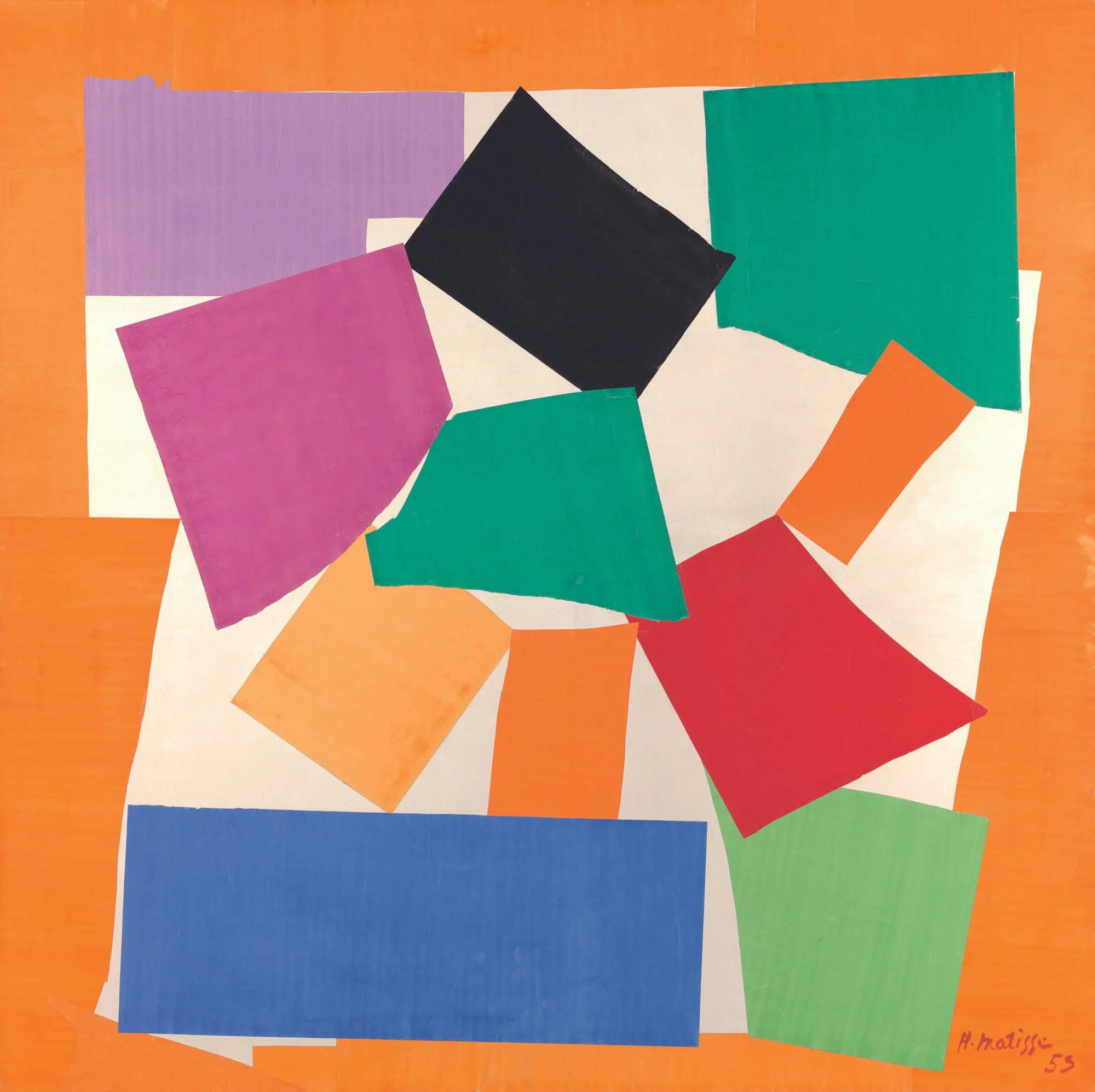
HENRI MATISSE, L’ESCARGOT (THE SNAIL), 1953
The medium changed utterly, but the self, the vision, the eye, and the belief that art should be a source of aesthetic pleasure and delight did not change at all.
Matisse did not choose the change. Illness took painting from him. What he chose was what to carry through it, and he could make that choice because he knew what was essential in his work. And what emerged in the cut-outs had been in the paintings all along.
Turner: The obsession outlives the manner
Matisse’s hand was forced, but Turner’s was not. Instead, he chose to, against the conventions of the market that had made him, and he did it from inside the institution that had made him too.
He entered the Royal Academy Schools at fourteen and was elected a full Academician at twenty-six. The pictures that made his name were disciplined marines in the Dutch manner. Fishermen at Sea, long thought to be his first oil shown at the Academy, in 1796, is moonlight, swell and careful rigging. By every measure the market recognised, he was a success at exactly what the market wanted and expected.
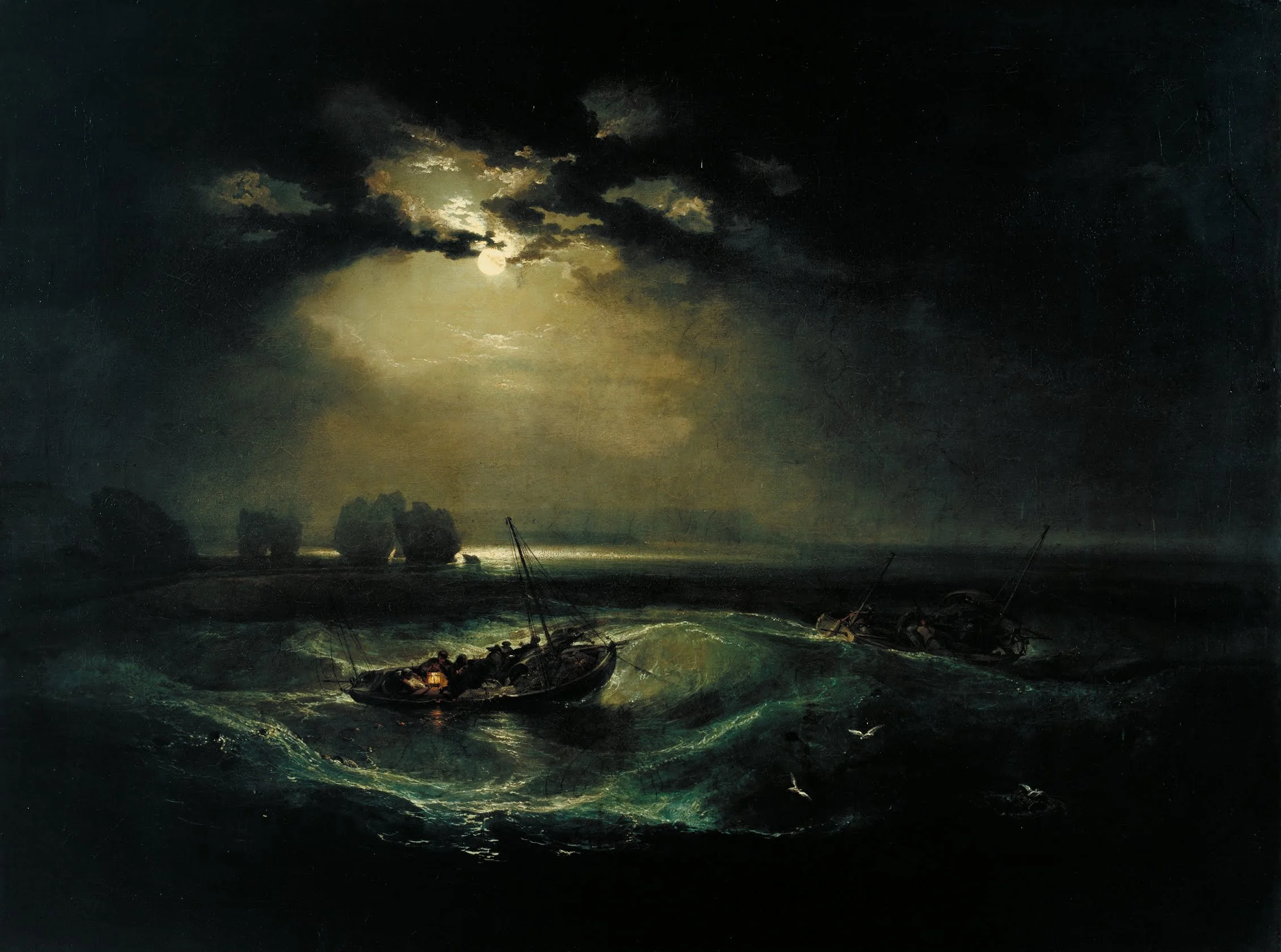
J. M. W. TURNER, FISHERMEN AT SEA, EXHIBITED 1796
Then he quite literally followed the light, and it took him half a century. In Snow Storm: Hannibal Crossing the Alps (1812) the subject is still a scene from history, but the storm has taken the canvas and the army is a strip along the bottom.
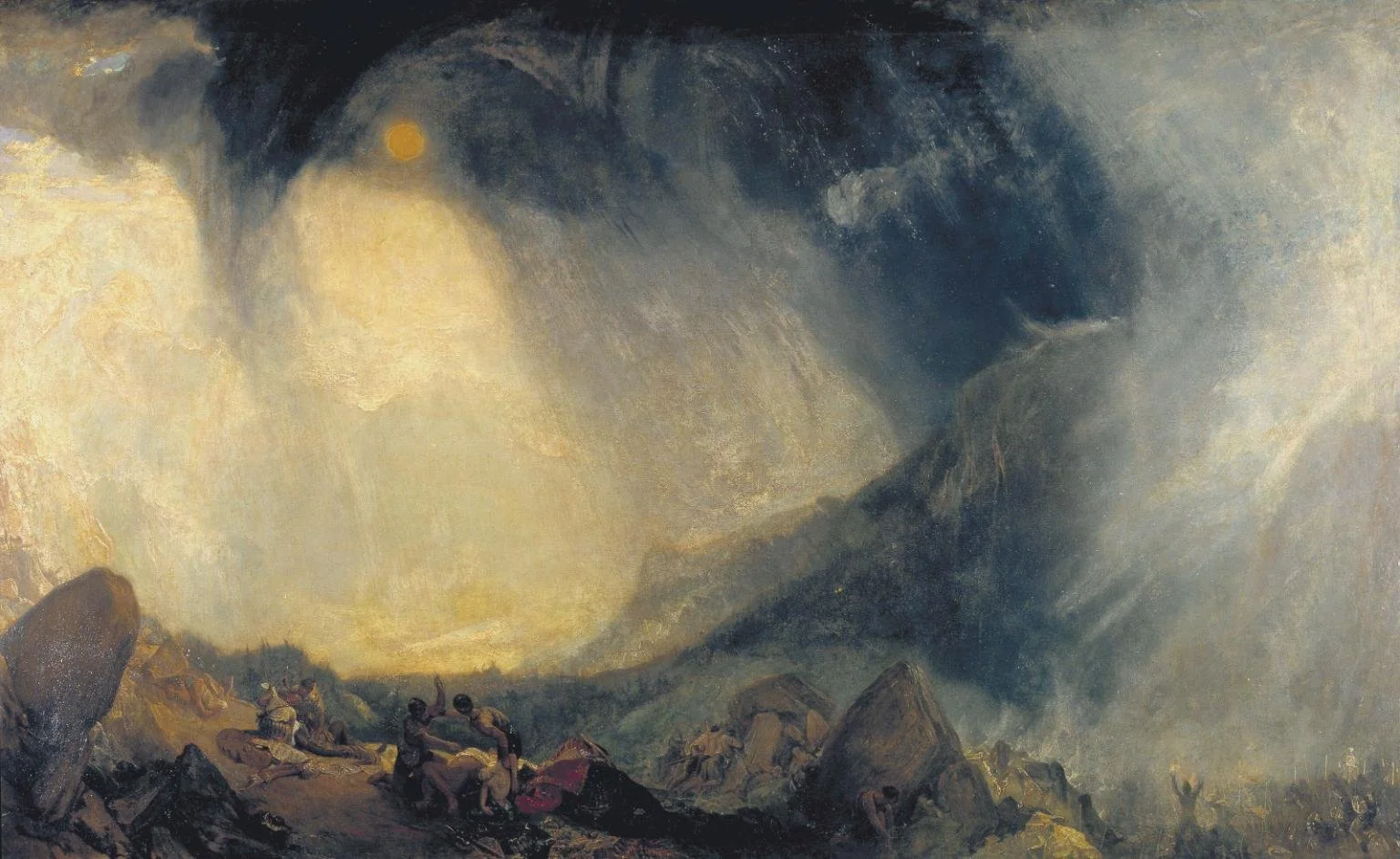
J. M. W. TURNER, SNOW STORM: HANNIBAL AND HIS ARMY CROSSING THE ALPS, 1812
In Dido building Carthage (1815) he paints in the manner of Claude and puts the sun in the middle of the picture. Not everyone was a fan — as early as 1816 Hazlitt reported that someone had called his landscapes “pictures of nothing.”
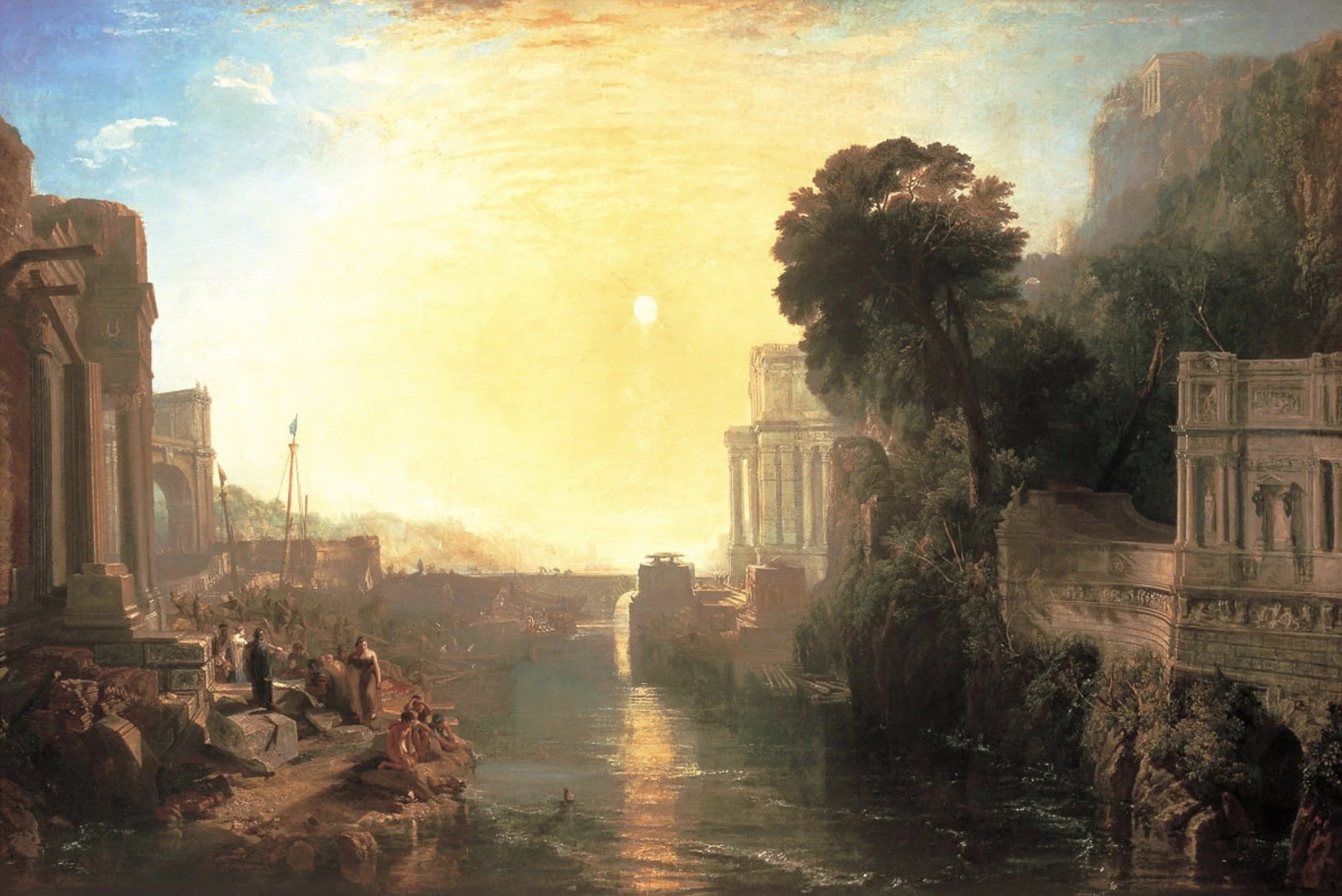
J. M. W. TURNER, DIDO BUILDING CARTHAGE, EXHIBITED 1815
Later came The Fighting Temeraire (1839). The ship is almost incidental to the sunset behind it. Step by step, everything else was allowed to thin and dissolve — hulls, coastlines, figures, horizon — until only light and atmosphere remained. The Temeraire was adored — after all, it still had a ship in it (oh how they loved their ships back then) and a story.
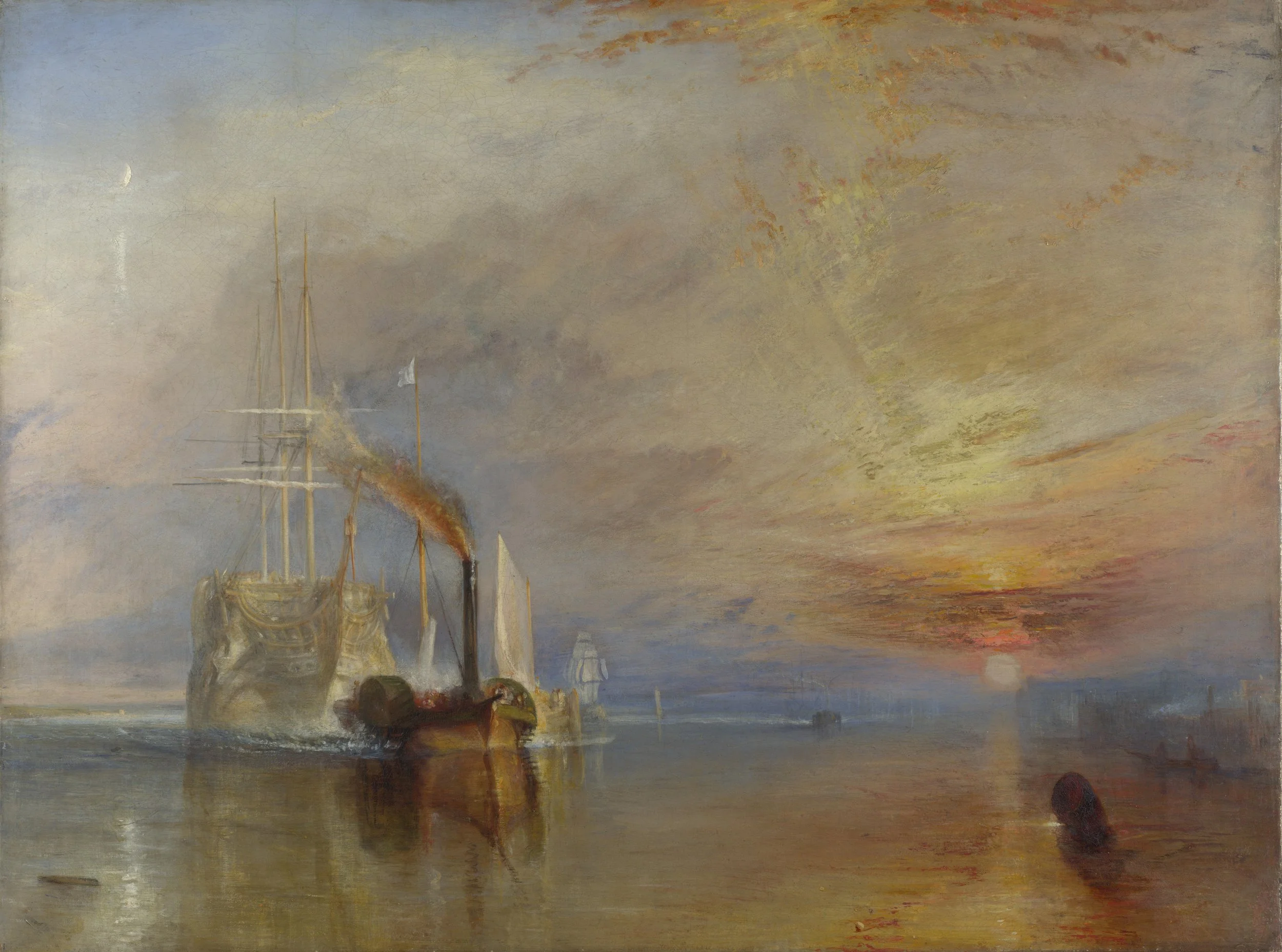
J. M. W. TURNER, THE FIGHTING TEMERAIRE, 1839
Three years later he went further. Snow Storm – Steam-Boat off a Harbour’s Mouth (1842) has barely a vessel left to look at, and the verdict was “soapsuds and whitewash.” Turner is reported to have replied, “What would they have? I wonder what they think the sea’s like?”
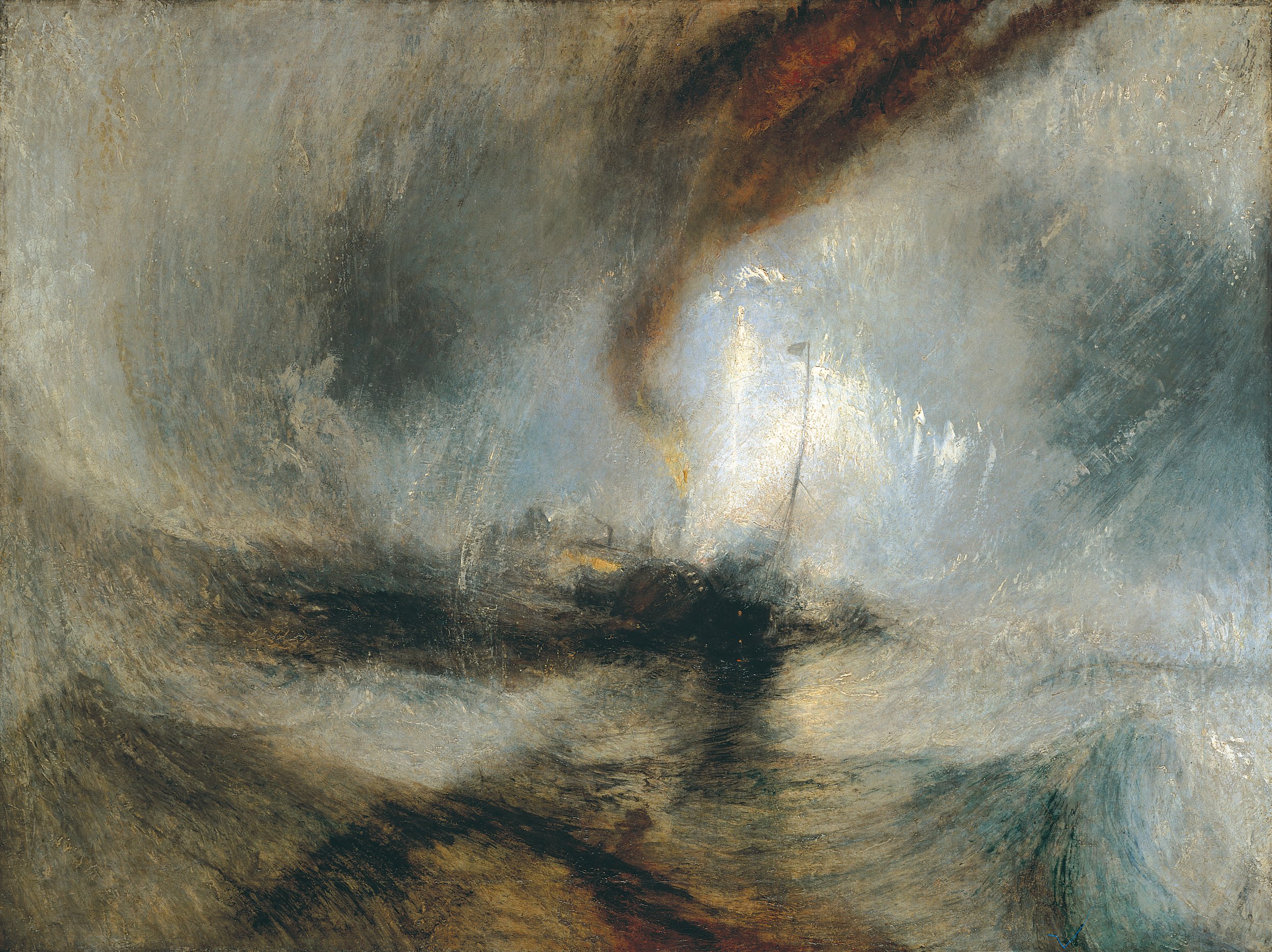
J. M. W. TURNER, SNOW STORM – STEAM-BOAT OFF A HARBOUR’S MOUTH, EXHIBITED 1842
There are two things that are worth noting for anyone running an organisation.
The first is that he let the new world into the picture. Rain, Steam and Speed (1844) puts a Great Western Railway locomotive at the centre of a storm of light. The most disruptive technology of his century — the internet of its time — became fresh material for his oldest obsession.
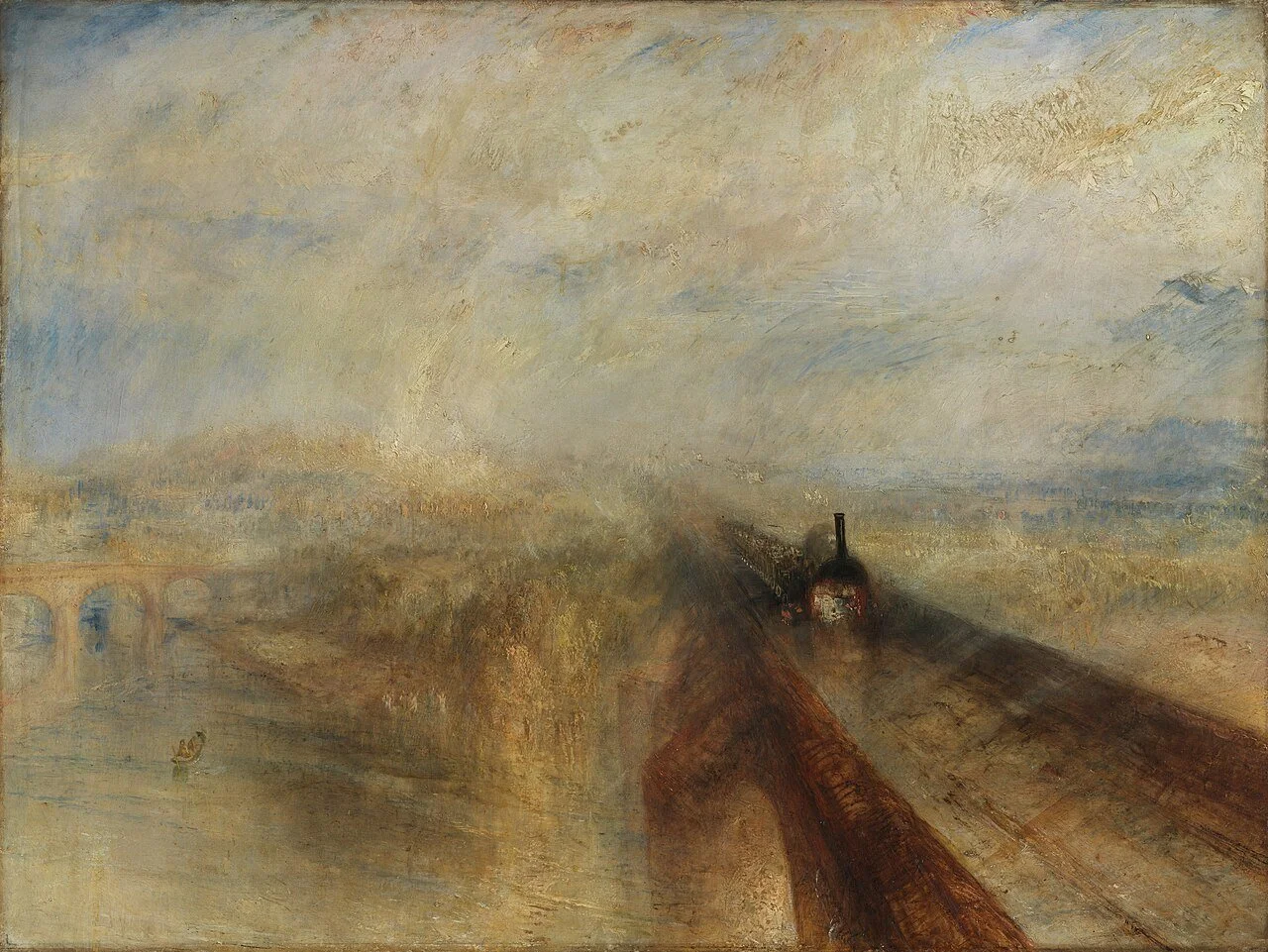
J. M. W. TURNER, RAIN, STEAM, AND SPEED – THE GREAT WESTERN RAILWAY, 1844
The second is that he did all of this from inside the Academy. He never left the institution that made him. On varnishing days, when exhibitors were permitted to retouch pictures already hung, he would arrive at his canvas that had little more than laid-in colour and finish it on the wall in front of his colleagues. He used the institution’s own rituals as the stage for its transformation. We might want to reflect that evolution and emergence do not require exile.
Frank Lloyd Wright: The second life
Both Matisse and Turner changed their practice from a position of strength. Wright changed after he had been written off as history, and he shows that the second life is available to those who keep the first one’s principle. It’s a comeback story.
Before the First World War he had already changed American domestic architecture. The Prairie houses, culminating in the Robie House of 1910, lay low and long against the land, with roofs that reached out over the ground and rooms that ran into one another. He called the principle organic architecture: a building that grows from its site, its purpose and its materials, so that form and function are one.
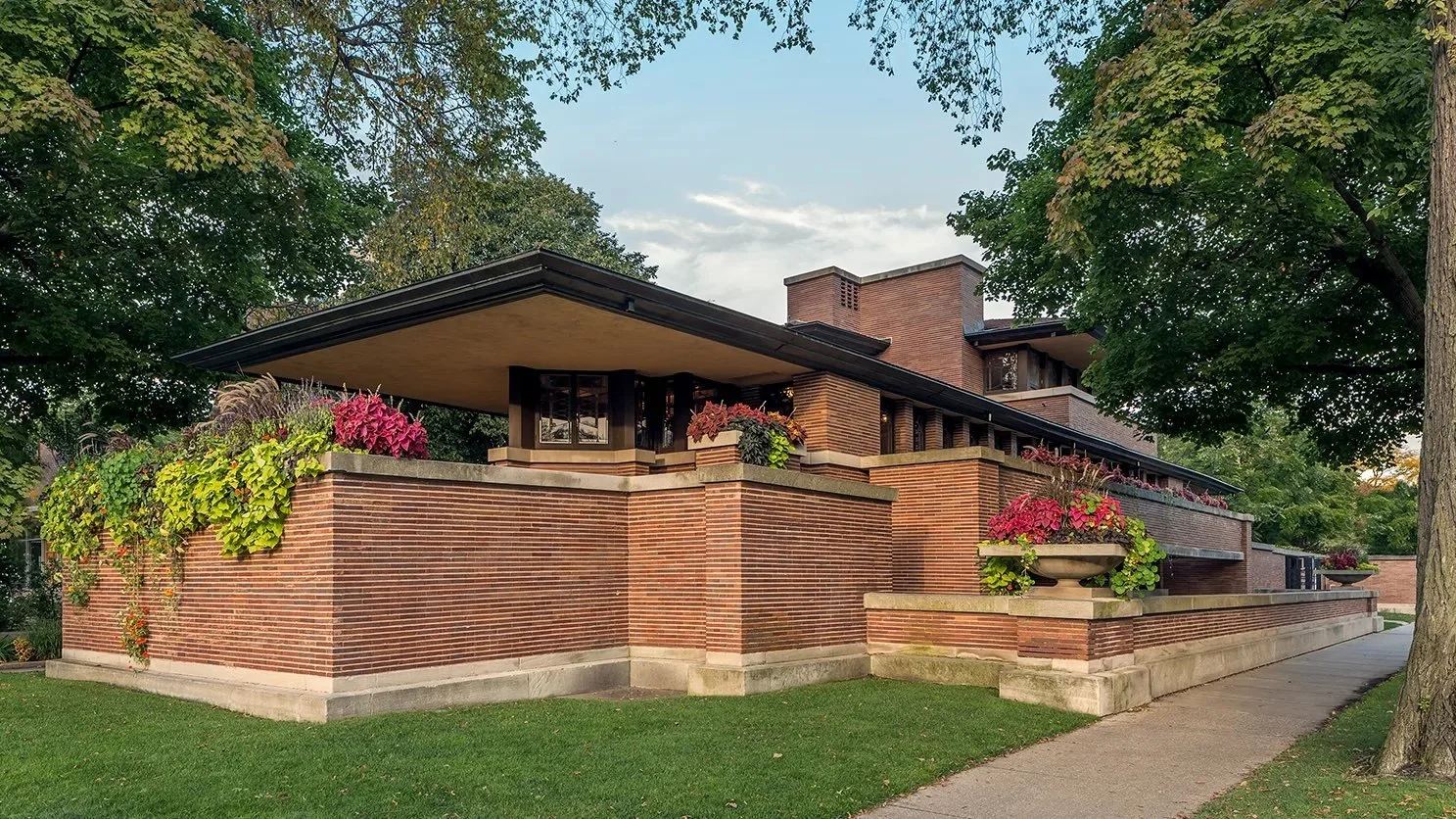
FRANK LLOYD WRIGHT, ROBIE HOUSE, CHICAGO, 1909–10
Then the practice came apart. Scandal, debt and a run of commissions that fell through left him, by the late 1920s, with little work. The bank took Taliesin, his home and studio. A younger generation treated him as a relic of the previous century — when the Museum of Modern Art defined the International Style in 1932, Wright was cited as a forerunner, as if his work was done.
In 1935, at sixty-eight (compilers of “30 under 30” etc. lists, take note), he designed Fallingwater: a house cantilevered over a waterfall in the Pennsylvania woods, its concrete terraces stacked over the stream as the rock ledges beneath it are stacked. It looked like nothing he had built before, and yet it was the purest statement of the principle he had held for thirty years, a building that grows from its site.
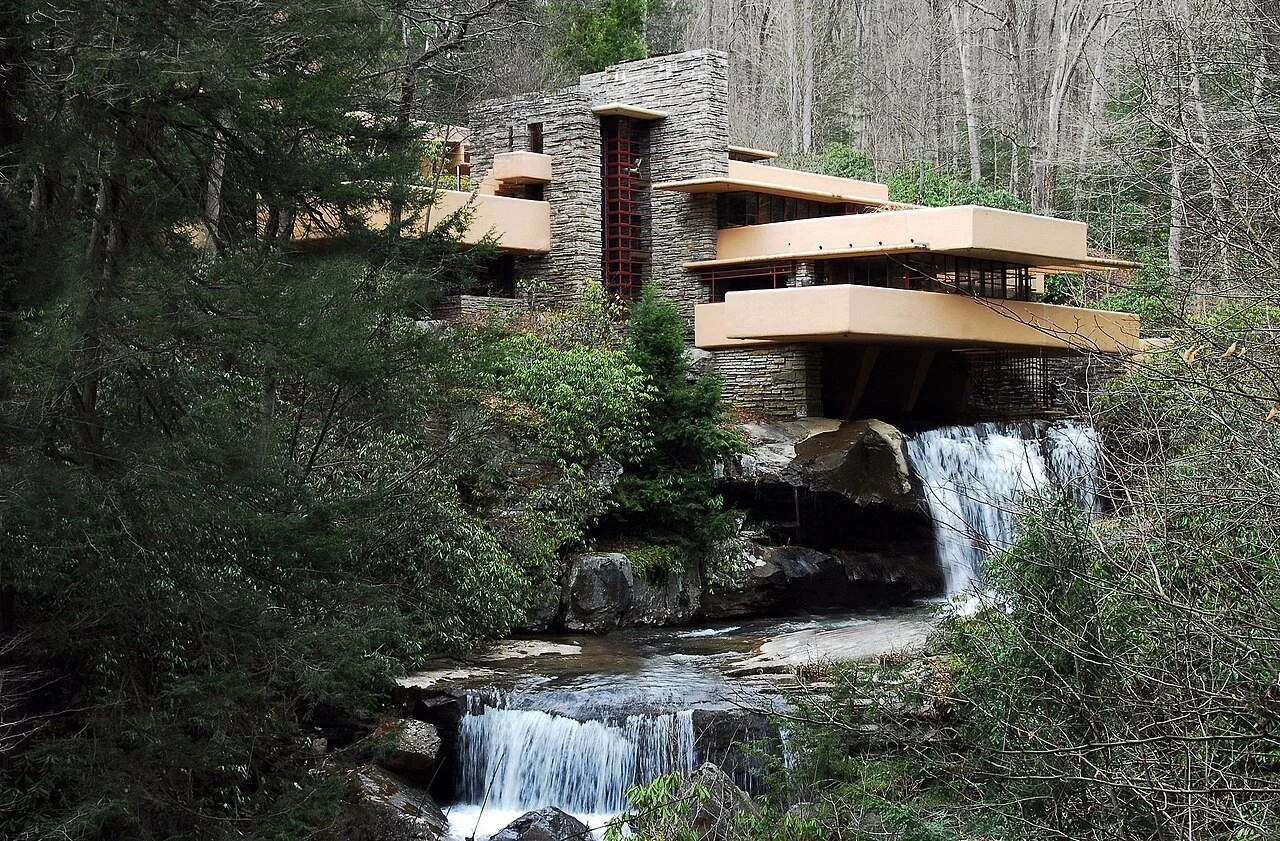
FRANK LLOYD WRIGHT, FALLINGWATER, MILL RUN, PENNSYLVANIA, 1935–37
The Johnson Wax headquarters followed, then the Usonian houses, then the Guggenheim: a single continuous spiral ramp on Fifth Avenue, opened in 1959, six months after his death.
The prairie house hugs the ground; the Guggenheim coils into the air. Not one form carries over from one to the other. The forms changed completely, but the change was the principle working on new problems. The written-off architect of 1930 is arguably still the single most famous American architect.
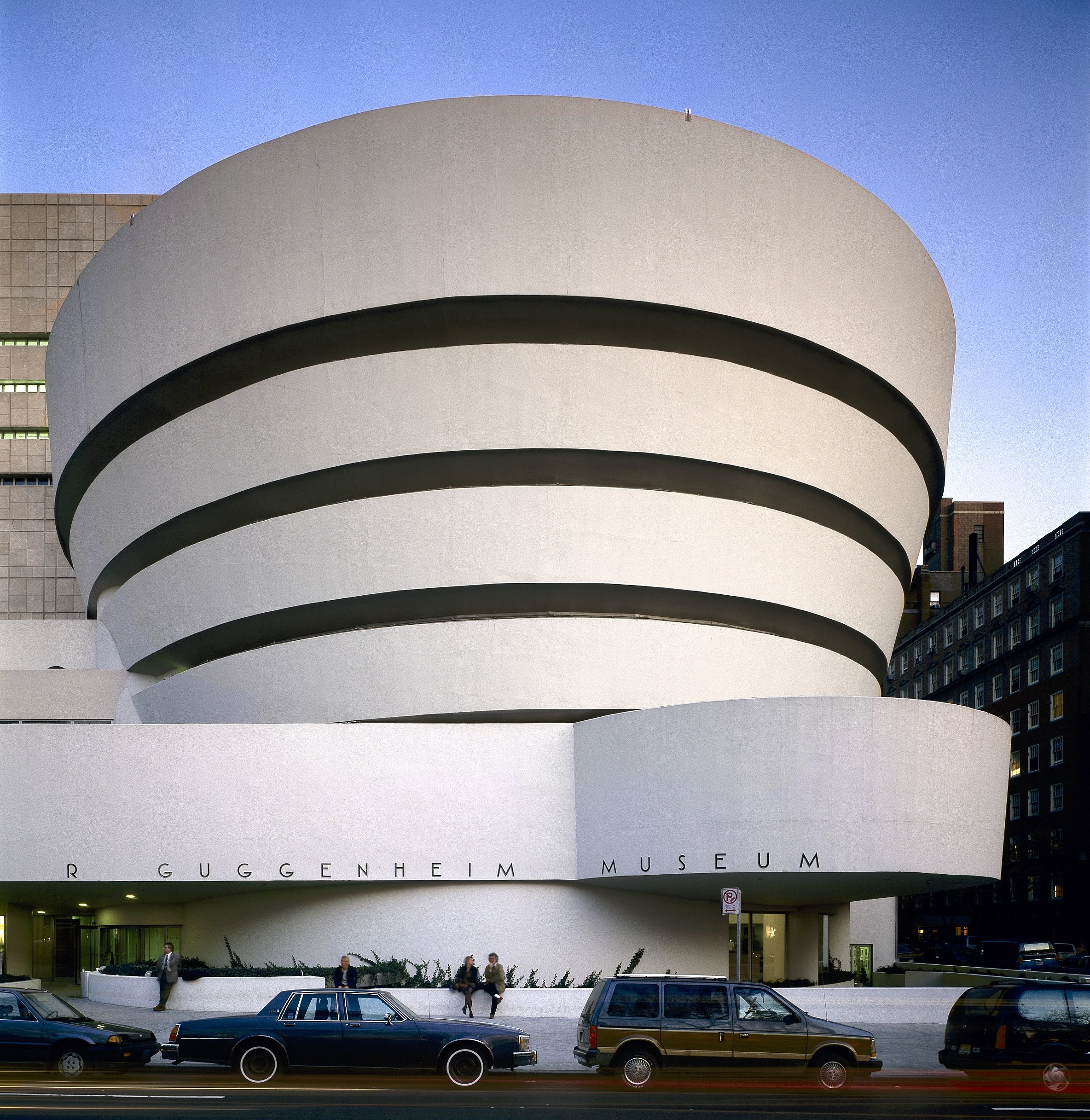
FRANK LLOYD WRIGHT, SOLOMON R. GUGGENHEIM MUSEUM, NEW YORK, 1943–59
.Where continuity lives: Obsession and eye
This is an amateur’s framework, offered as one, but looking at long careers it seems to me that an artist’s continuity lives in one of two places. Each answers a question any identity can ask of itself: what am I obsessed with, and how do I see?
For some the answer lies in the obsession: the one thing, returned to for a lifetime, while the style transforms around it. It can be a mountain, a quality of light or, as with Wright, a principle. Cézanne painted Mont Sainte-Victoire more than sixty times. Morandi spent forty years on a shelf of bottles; Turner sixty years on light; Hokusai his seventies on Fuji.
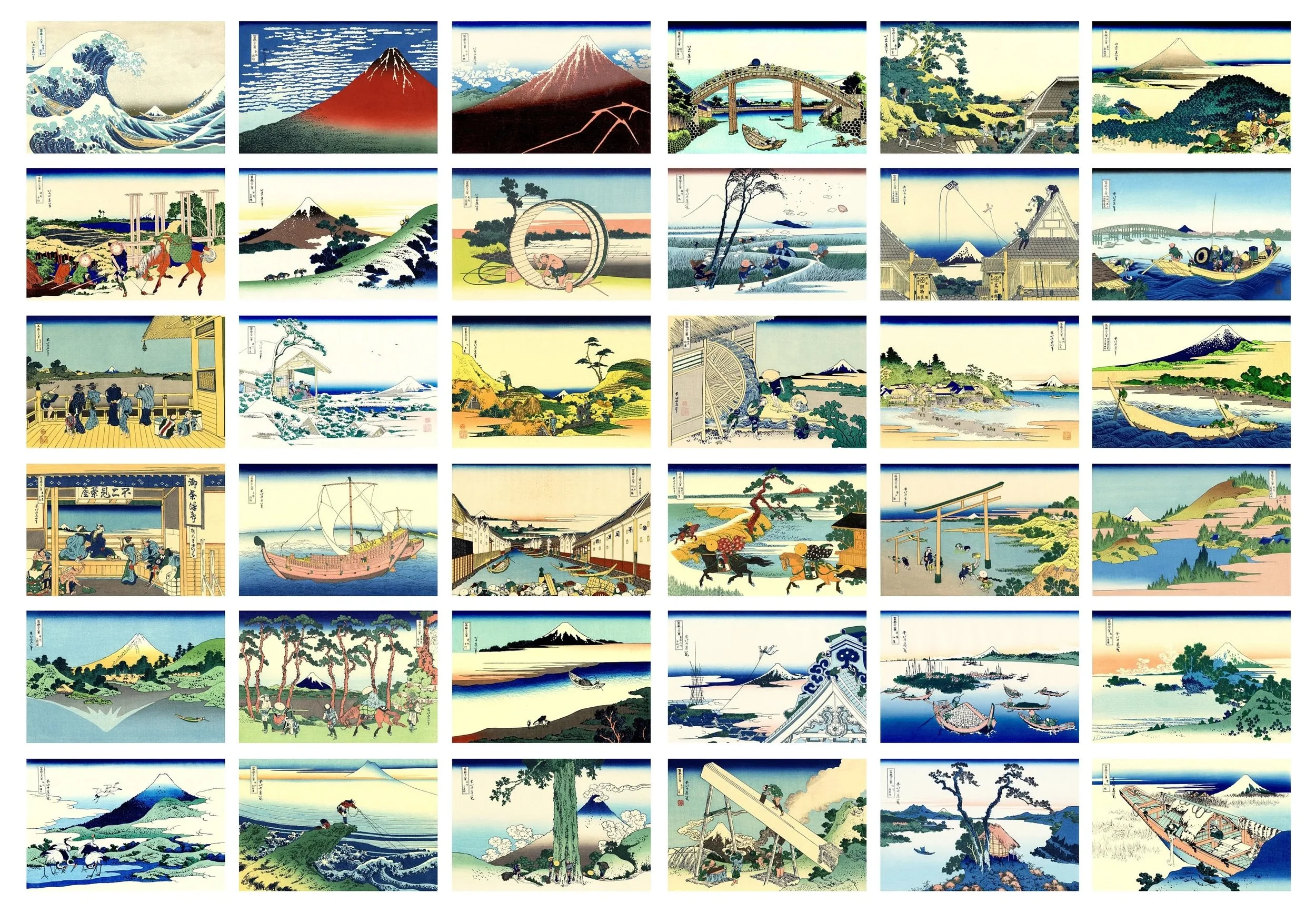
KATSUSHIKA HOKUSAI, FUGAKU SANJŪROKKEI (THIRTY-SIX VIEWS OF MOUNT FUJI), C. 1830–32
For others, continuity lives in the eye: a way of seeing so distinctive that the subject can be anything at all. Van Gogh’s sunflowers, postmen and night skies are one body of work because the hand is unmistakable within a single brushstroke.
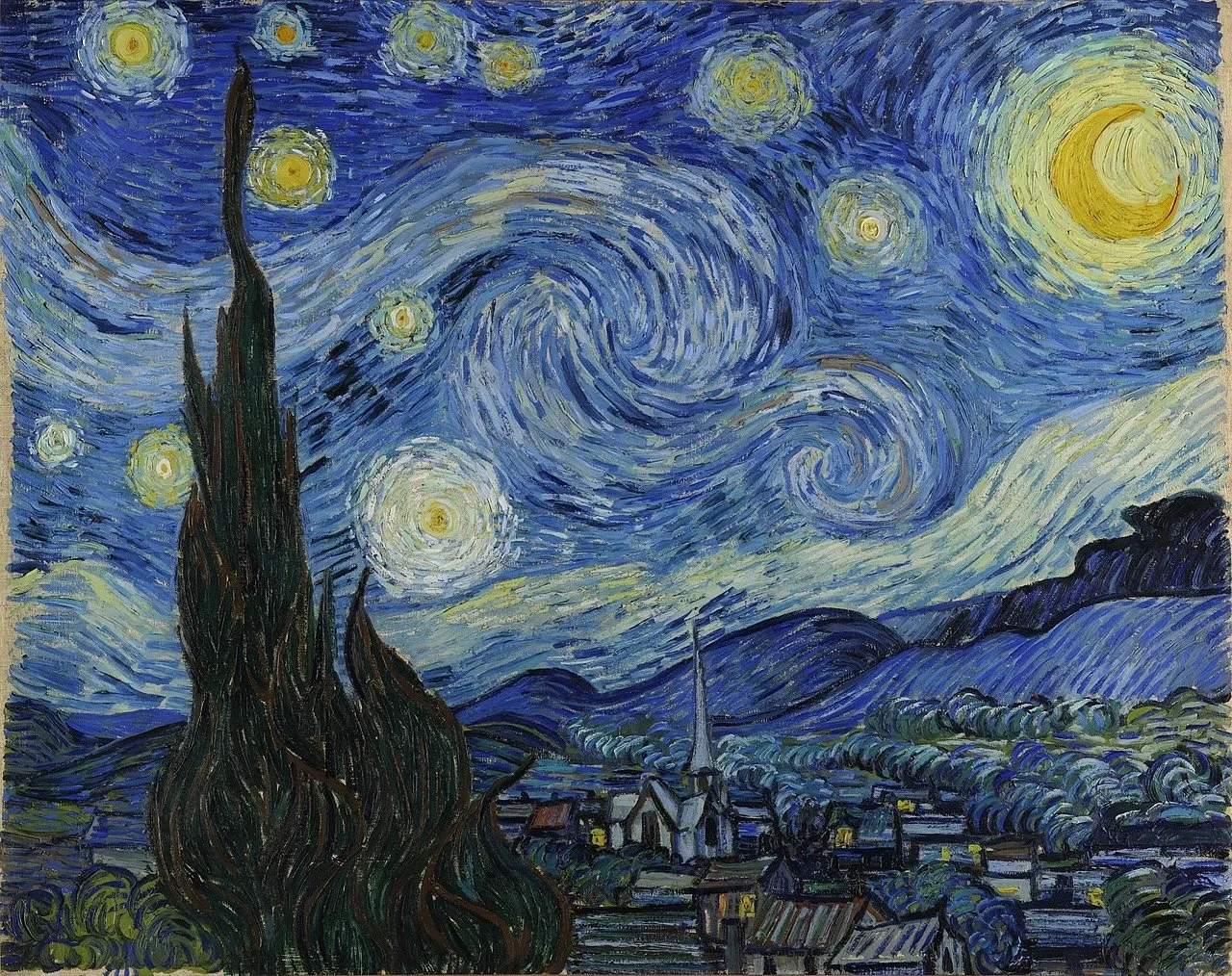
VINCENT VAN GOGH, DE STERRENNACHT (THE STARRY NIGHT), 1889
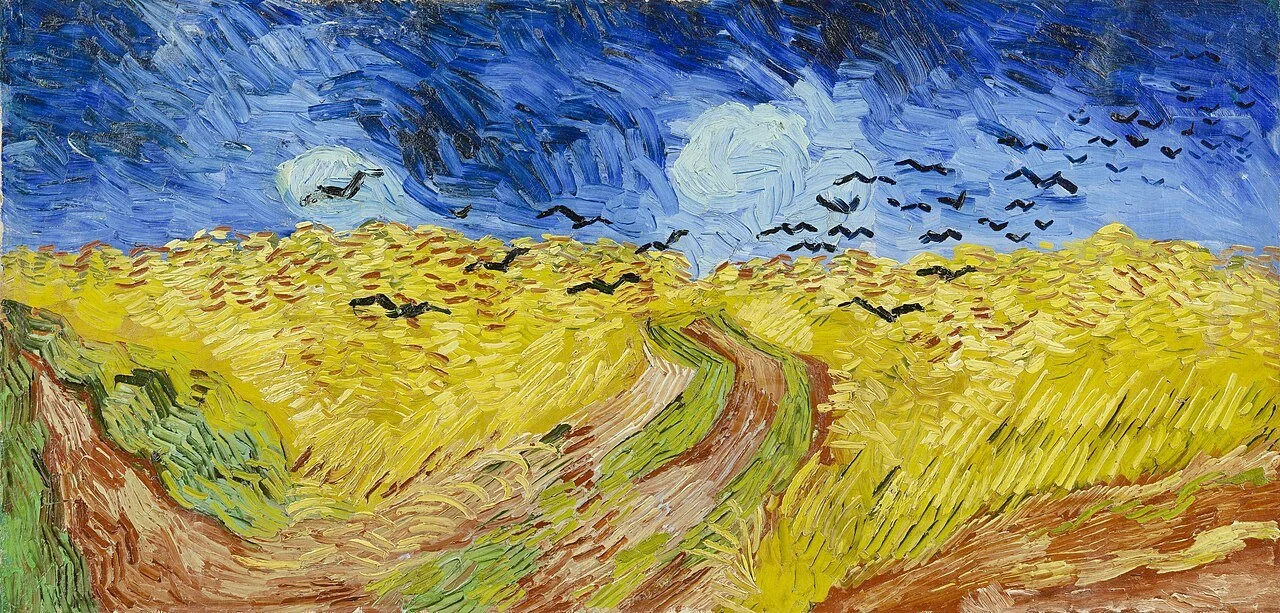
VINCENT VAN GOGH, KORENVELD MET KRAAIEN (WHEATFIELD WITH CROWS), 1890
Hockney: The eye that kept asking
I have to speak about my beloved Hockney. He is the clearest case I know of continuity living in the eye, and he is the case for restlessness. For sixty-five years he never stood still, and every move was another attempt at one question. He painted swimming pools, portraits of friends, the Grand Canyon, Yorkshire hedgerows and a Normandy spring, in acrylic, Polaroid collage, photocopier, fax and on an iPad. None of it was novelty for its own sake. Constant experiment is healthy when a constant question drives it. Turner let the new technology into the picture. Hockney picked it up and painted with it.
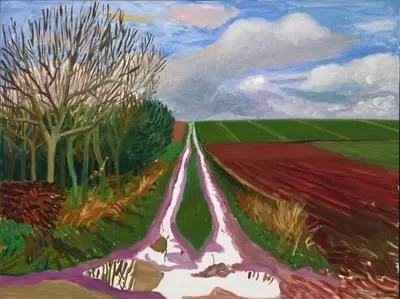
DAVID HOCKNEY, A BIGGER PUDDLE, WINTER 2005
Two things never changed, and they are why every one of those pictures is instantly his. First there is the look: clear, high-keyed colour, and a frank pleasure in light, water and the people he loved. “I enjoy looking,” he told NPR’s Susan Stamberg. “I can look at a little puddle on a road in Yorkshire … and think it’s marvelous.” And those words contain the second thing that never changed — the question he never stopped asking: how do we actually see?
There’s a lovely outtake from Bruno Wollheim’s documentary David Hockney: A Bigger Picture (2009) in which Hockney recounts taking critic Marco Livingstone and the publisher Stephen Stuart-Smith on an evening drive through Yorkshire. “Notice the colour of the road right now,” he says to Marco. Marco replies that it’s purple. Ten minutes later Hockney asks him again. It’s a totally different colour. Later Marco remarked to Hockney that he’d never thought about the colour of the road. Nothing had been added to that road. Hockney looked for long enough, and the colour emerged.
Polaroid joiners that assemble a scene from dozens of glances, landscapes spread across many canvases that you seem to walk into… The subjects and the tools were how he pursued the question: how do we actually see?
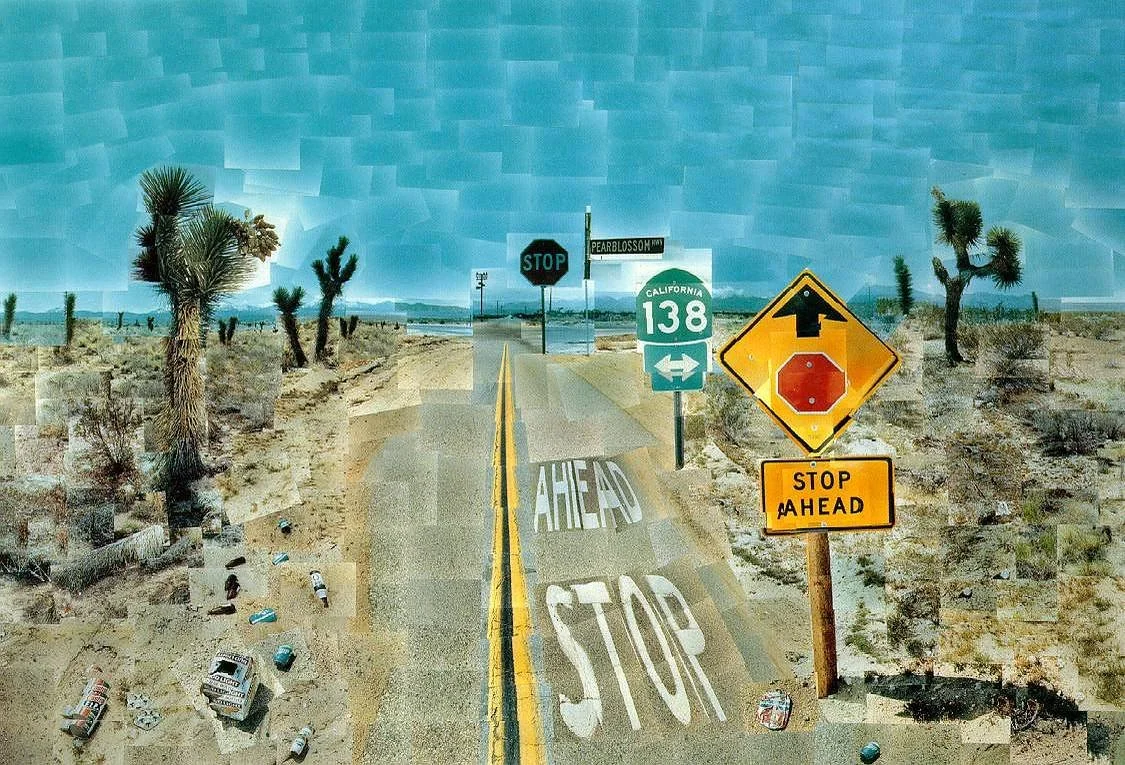
DAVID HOCKNEY, PEARBLOSSOM HWY., 11–18TH APRIL 1986, #2, 1986
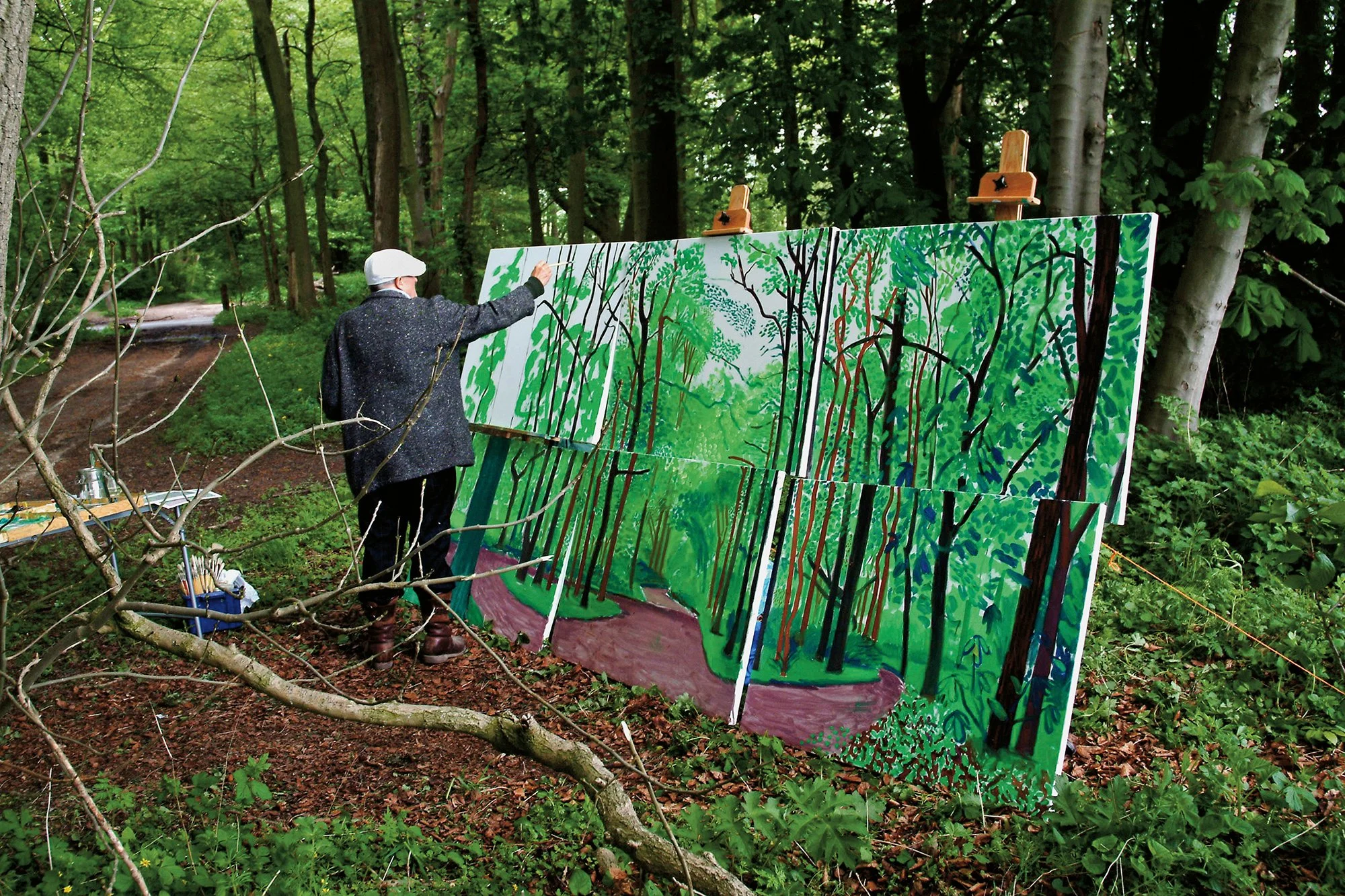
DAVID HOCKNEY PAINTING MAY 17TH 2006, WOLDGATE WOODS, EAST YORKSHIRE
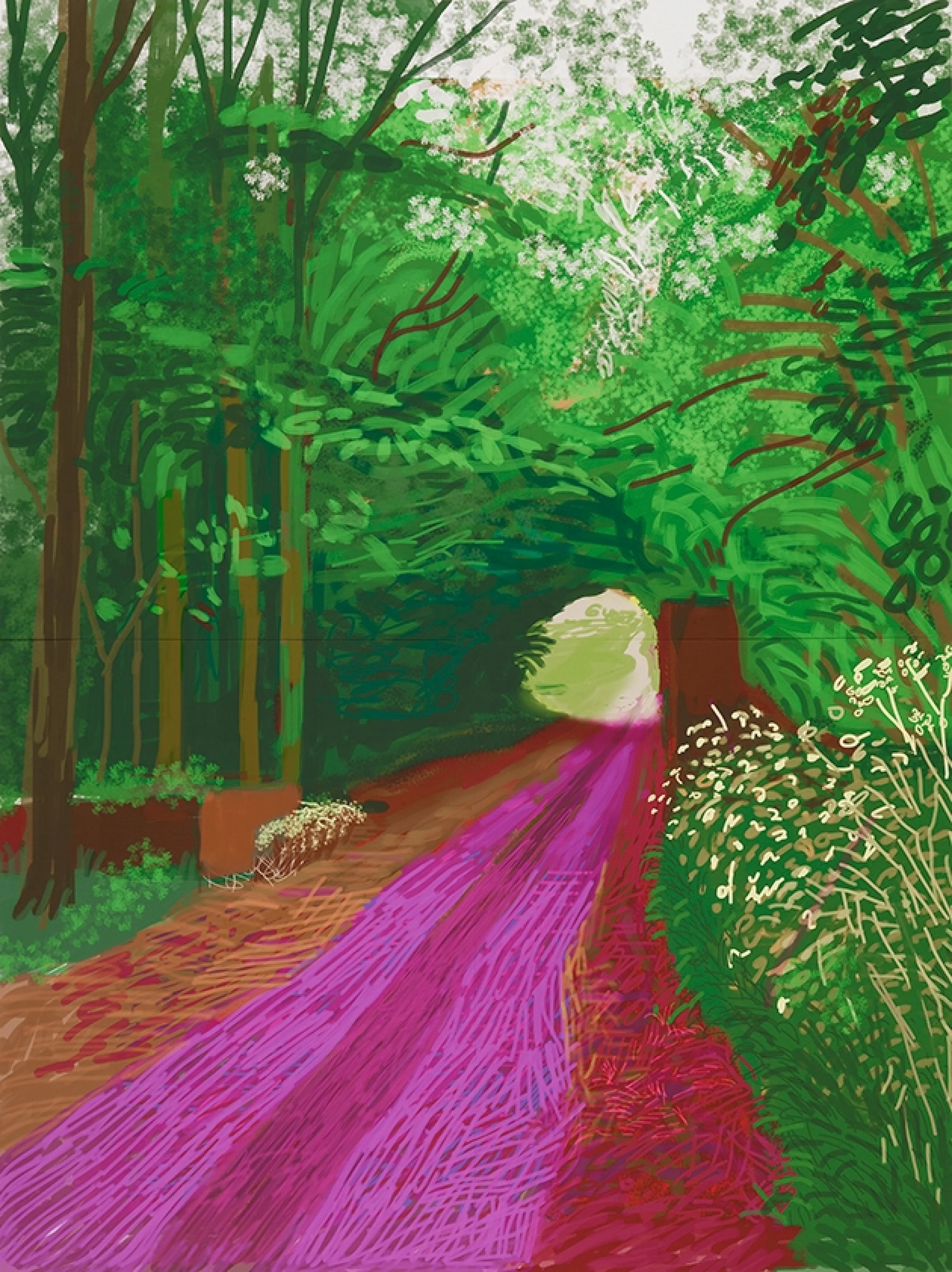
DAVID HOCKNEY, THE ARRIVAL OF SPRING IN WOLDGATE, EAST YORKSHIRE IN 2011 (TWENTY ELEVEN) – 31 MAY, NO. 1
Hold the obsession constant and everything else can change around it. Hold the eye constant and everything else can roam, the subject included. Few careers are purely one or the other — what matters is that something holds and something moves, and that the artist knows which is which.
***
Artist and organisation: Different masters, one method
The artist and the organisation do not serve the same master, and it would obviously be stupidly naïve to pretend otherwise. The artist answers to a vision — recognition is welcome when it comes, but Matisse did not cut paper so that the room would murmur “ah, a Matisse.” An organisation or brand, however, must be recognisable as being itself.
Nor do they keep the same time — after all, these careers ran for fifty and sixty years. Turner had six decades with his obsession, and Hockney had longer. A chief executive now lasts about seven years, and a chief marketing officer little more than four. Each inherits an identity in the middle of its story and hands it on unfinished. An artist can carry the knowledge of what they are in their own head for a lifetime. An organisation has to keep it somewhere that outlasts whoever holds the job.
But whatever the master, evolution that works is achieved the same way: by knowing with precision what is held and what evolves. Strip away everything that separates the studio from the boardroom and both are left holding the same questions. What are we obsessed with? How do we see? The artists are just the ones who have been answering them the longest.
Johnny Cash: The boldest expression is the most sensible move
One more artist, because he shows something the others do not. Matisse, Turner, Wright and Hockney each found the way forward alone. Cash was shown it by an outsider.
By 1986, Nashville had finished with him: dropped by Columbia after twenty-eight years, ignored by country radio, reduced to novelty bookings. The industry treated him as an analyst treats a legacy asset in decline, as something to harvest.
Then he made the least Nashville decision imaginable. He signed with Rick Rubin, a producer from hip-hop and metal, who sat him in a living room with a guitar and asked for nothing but the voice and the conviction.
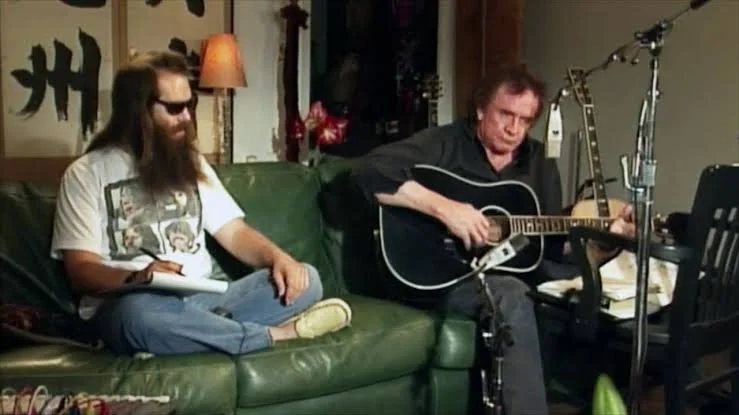
JOHNNY CASH AND RICK RUBIN, LOS ANGELES, 1993 (VIDEO STILL)
American Recordings (1994) stripped away four decades of production and polish, and the old obsessions with sin, redemption and mortality that had been there since Folsom, were now distilled. As the outisder often does, Rubin didn’t add anything, but just cleared the way for what was there to emerge.
In 2002, at seventy, he recorded “Hurt,” a song by an industrial rock songwriter thirty-three years his junior. It was heard as the most Johnny Cash thing Johnny Cash had ever done, and brought it to an audience two generations removed from Sun Records. A reminder that when you know precisely what your essence is, the boldest possible expression of it can be the most sensible move you can make. And it took someone from outside Nashville to see it.
Tom Ford: A new eye on an inherited obsession
One objection remains. Matisse had one life and one self to keep, but an organisation changes hands. The person asked to evolve it was usually not in the room when it was formed. Tom Ford (then and now) shows how to pull that off.
In telling it I lean heavily on two writers: Alexander Fury, who reviewed Haider Ackermann’s debut for AnOther, and the always insightful James Denman, whose recent dispatch Strategy Before Spectacle, in his newsletter The Society of the Spectacle, looks back on what Ackermann has done since. The reporting is theirs. What I make of it is mine.
In March 2025 Ackermann showed his first collection for Tom Ford, in Paris, with Ford himself watching from the audience. The two could hardly be less alike. Ackermann made his name with small, slow shows prized for their colour and fabric. Ford built his on sex, cinema and black. Ackermann kept the monochrome as a trace and saturated the rest: tailoring and evening dresses in primrose, lilac and a poisonous green, changing the most recognisable code the house owned.
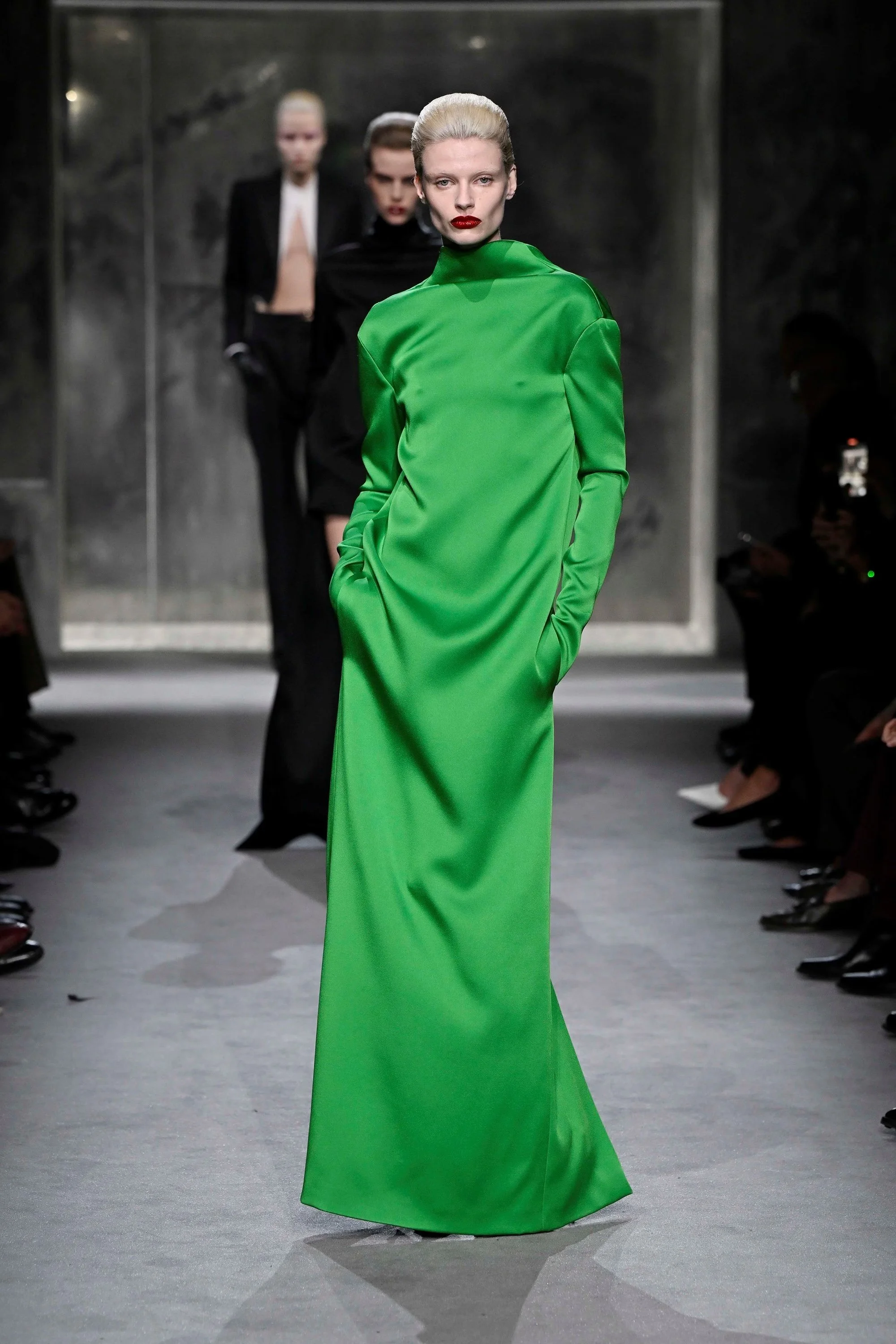
TOM FORD BY HAIDER ACKERMANN, AUTUMN/WINTER 2025, PARIS, MARCH 2025
Fury’s verdict was that the soul of the house had come through intact — when most revivals, he observed, are about specific moments, this one was about a feeling. Where the usual revival replays the archive as a hit parade, Ackermann had gone past the red velvet suit and the black to the thing they were for. On Fury’s reading, that thing was desire. Ackermann’s own show notes put it in eight words: “He is nightlife, I am the morning after.” The same obsession, just at a different hour.
There is some symmetry here. Thirty years earlier, Tom Ford had himself done the same job for someone else’s house. When he became creative director of Gucci in 1994 the company was close to collapse, worn down by a decade of family feuds and by a name spread across thousands of products. Ford went through the archive, filled with echoes of the days when it dressed the likes of Liz Taylor, Grace Kelly, Liza Minnelli, Clark Gable and Sophia Loren. “Gucci used to dress all the stars and celebrities”, he said, “and I thought this is what today’s movie stars and celebrities should be wearing.” He saw the original obsession and turned up the volume (and heat) on it. His autumn 1995 collection made the house carry it again: velvet hipsters, jewel-toned satin shirts — in his words, “sexy, sensual, fuck-me clothes”.
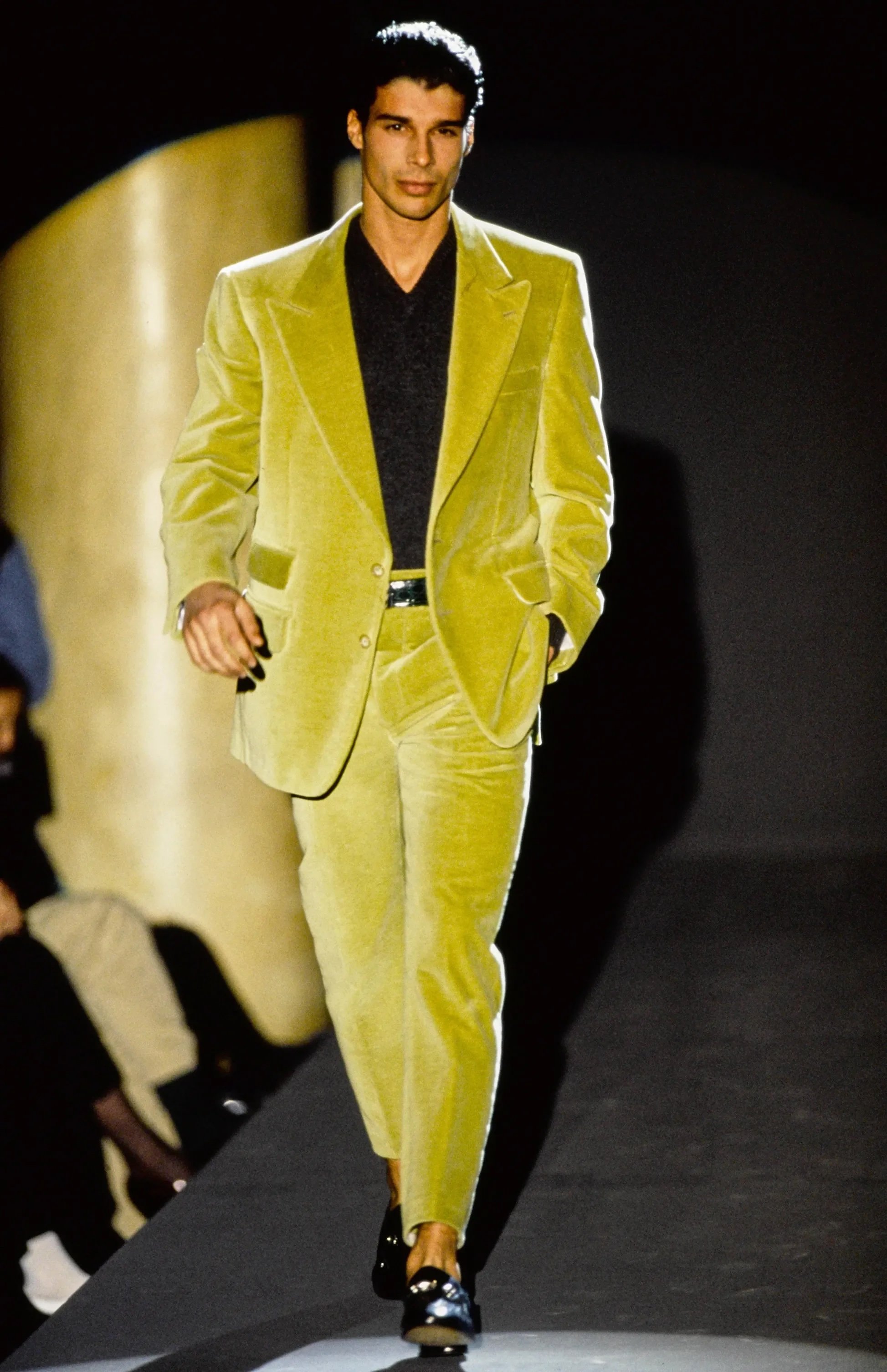
GUCCI BY TOM FORD, AUTUMN/WINTER 1995
The man whose name Ackermann inherited had been a successor first, and knew what a custodian owes the house and what a newcomer can give it.
With Ackermann, a new eye was trained on an inherited obsession: desire. And this clarifies what can and cannot be handed on. An obsession can be inherited. An eye cannot; it can only be replaced, which is why businesses built on a founder’s eye so often falter when the founder leaves. The successor’s task is to find the place where their own obsession and the house’s are the same one. Imitation fails that test, and so does wilful self-expression.
Jaguar: Back to the future?
In 2024 Jaguar withdrew from the market, announced itself with a rather strange campaign called Copy Nothing and a new (IMHO awful) wordmark, and was mocked for both. Two years later, in New York, it unveiled the Type 01. The car suggests the mockery might have come too soon. Jaguar went back to the years when it was at its best and asked what it had been for.

Jaguar E-Type
The answer Rawdon Glover managing director of Jaguar, and the executive in charge of the brand and its relaunch gave Mark Ritson was “beautiful, fast cars at a fraction of the price of the exotics”. The E-Type of 1961 was sold as reaching 150mph and cost £55,000 in today’s money — half the price of rivals such as Aston Martin and Ferrari. The Type 01 is expected to start at around £130,000, above a Porsche Taycan and well below a Bentley Continental GT which starts at £218,720.
Jaguar kept the proportion. The distance from the front wheel to the door is the same share of the car’s length as it was on the E-Type, and the long bonnet is still there, though there is no longer an engine that needs it. That said, it dropped the “growler” emblem, which feels more than a little baffling.

jaguar type 01
Along the side of the car runs a single aluminium panel nearly three metres long, from the windscreen pillar to the tail. Jaguar’s computer models said it could not be pressed because it was too wide and had too many angles. The obvious answer would have been to simplify it with a crease line, but instead the engineers spent twenty-two weeks making it work as drawn. Jaguar calls it the Impossible Panel and put it on show at the launch. “Type 01 distils the essence of Jaguar into a luxury grand tourer for a new era,” said Rawdon Glover. Whether the car succeeds or not, that feels like the right ambition.
The car aims past the old customers, so change was always coming, and arguably necessary. Rawdon Glover has said he expects only about fifteen per cent of existing customers to follow. Those customers loved a Jaguar that had drifted into comfortable age, and leaving them is part of the way forwards. You can argue with the execution, but the instinct was right.
Nobody yet knows whether Jaguar got this right. Its prospective buyers may care about all of this more than we think, or a great deal less. Orders open early next year and the first Type 01s reach customers in the second half, and knowing what you are is no guarantee the market will reward it.
Milka: a brand embarrassed by itself
I can offer one case from the inside, and one where the verdict is in. It is this essay’s charge in a single company: a brand busy with everything except the thing it was. Some years ago I worked on Milka, and when we arrived the brand was drifting. It had over-invested in an endless cycle of innovation, chasing short-term, incremental revenue, and had neglected the tablet, the plain bar of chocolate where the bulk of the business was. The business was softening.
The drift showed most clearly in how the organisation felt about itself. It no longer knew what to do with Lila, its purple cow, which we would now call its distinctive brand asset. In some markets she had become a character, and irony had crept into the brand’s voice. The often cloying and saccharine advertising of the past was looked back on with embarrassment. Milka had come to wince at its own tenderness.
Tenderness was Milka’s obsession, and it had been conceded by degrees: first to novelty, then to irony. What sets the chocolate apart is that it is meltingly tender, in a way that its British stablemate, Cadbury, is not. We were outsiders, as Rubin was to Nashville, and our job was the successor’s job: to see what the house was obsessed with and see it with fresh eyes. We ran right at the central product truth, and at the tablet that carried it. We ran, unapologetically, right at moments of human tenderness. We ran right at the Alpine origins of the milk. And we used Lila as a distinctively purple sign for all of it, no longer a character with a life of her own.
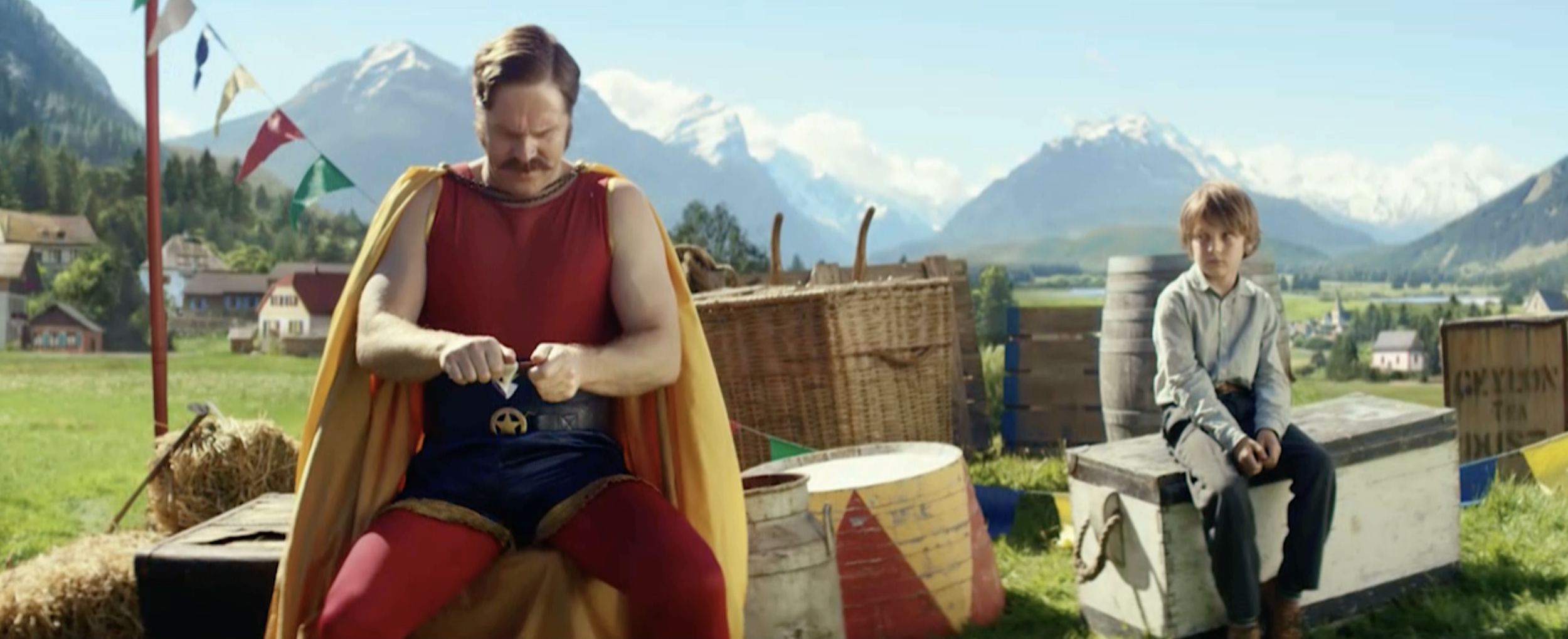
milka, strong man, with wieden+kennedy amsterdam, 2016
The organisation’s belief in itself was restored. Retail belief was restored. The core product got the focus it had lacked. The innovations and seasonal offerings carried on, now framed within a single unifying creative idea. Evolution is a different thing from constant change, and Milka had been suffering from the second. Nothing was invented. The tenderness was already in the chocolate, and the work was to let it emerge. Milka became more itself: one obsession, found by a new eye in the product, in where the milk came from and in what the brand showed of people. And the cow mattered again once she had something to stand for.
Self-knowledge before market knowledge
The prerequisite for evolution is self-knowledge. Market knowledge comes second. You cannot know what is safe to change until you know precisely what must never change.
But question these artists pursued is “what wants to emerge?”, not “what is missing?” In the artists who had a self to bring, late style was distillation. Turner at sixty-seven, Wright at sixty-eight, Matisse in his eighties, Cash at seventy: each made the most recognisable work of their life at the moment they had changed the most.
Look across these careers and none of them drifted. Late Turner is more about light than early Turner. The cut-outs are more purely Matisse than the paintings. Cash with one guitar is more Cash than he ever was with a studio band. The change stripped away whatever was not essential, and what was left was concentrated. Hockney got there the other way, by widening: more tools, more subjects, more ways for the same eye to work.
The architect Louis Kahn put the same question to his materials. “You say to a brick, ‘What do you want, brick?’ And brick says to you, ‘I like an arch.’” It is the question of a man who knew what he was, and whose great buildings — the Salk Institute, the Kimbell, the National Assembly at Dhaka — all came in the last fifteen years of his life. He did not ask the brick what was missing, he asked it what it wanted to become.

LOUIS KAHN, SALK INSTITUTE FOR BIOLOGICAL STUDIES, LA JOLLA, CALIFORNIA, 1959–65
So, faced with a legacy brand in need of new life some might ask, what do I do with this tomorrow?
Go to the archive, as Tom Ford did at Gucci, and look at what the organisation has actually done. The obsession will not be written down. It shows in what was made, again and again, and in what was refused. That much you inherit, but the eye you have to bring yourself. So look at the obsession with a new one, and ask the artist’s question: what wants to emerge? Staying true to it will mean changing.
***
Authenticity as a process demands a particular sensibility, finely tuned and, I’d argue, rarer than talent. It holds two capacities that pull against each other and lets neither win: the stubbornness to stay with one obsession whatever the ego, the market, the critics or the board are asking for, and the openness to change everything else, including what has worked and what you have come to love. Most people, and most institutions, possess one of these. The conservative has the first and calls it integrity, while the innovator has the second and calls it courage. Each is half the sensibility, and half is how missteps come about. To hold both at once, for decades, is rare in any domain of human practice, in painting and architecture, in music, in the running of a company. Matisse had it in his bed with a pair of scissors. Turner had it in front of a locomotive. Hockney had it with his brush, his Polaroid camera, his iPad.
That is the discipline underneath every act of evolution that worked. Know your obsession so well that change stops being a threat to it and becomes the way to more of it. Authenticity, understood as a process, is simply what that discipline looks like from the outside.
It also means that the question most leadership teams ask — how much do we dare change? — has no useful answer. Turner, Wright and Matisse changed almost everything and became more themselves. The more useful question that is what you are obsessed with.
So authenticity demands evolution. Preservation asks what you were and tries to keep it, but emergence asks what you are and lets more of it out, which sometimes means changing a great deal and sometimes, as with Milka, it means stopping the change and running back at the core seen through a new eye. Matisse was still at it in the last year of his life, and Hockney was still asking how we see. An organisation has no last work — it has only the next person (and the next eye) to hand the question to.
***
Dolly Parton put the whole of this essay in a single line: “Find out who you are and do it on purpose.”
The finding out is the work I do now: helping leaders discover what their brand or business is truly for, and so what it is free to change or rediscover — and applying that to every surface where business and identity meet. If that is a question you are facing, let’s talk: martin@emdub.co