
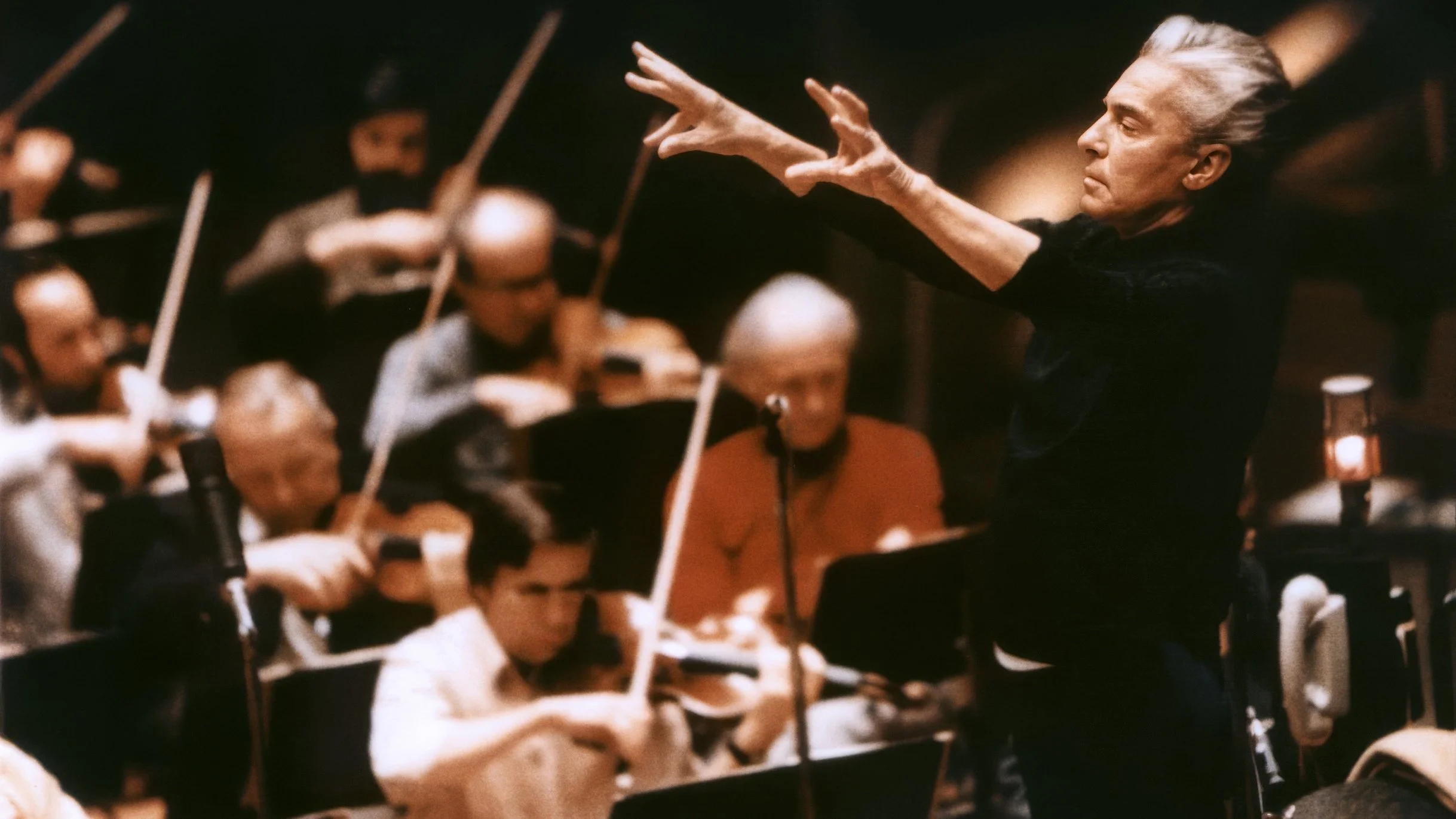
Herbert von Karajan, 1973 | Picture: Siegfried Lauterwasser
Orchestration. The word keeps coming up in keynote presentations, trade columns, and opinion pieces. The argument is that AI is multiplying marketing’s moving parts: more channels, more formats, more variants, more agents briefing other agents. So clients and agencies, we’re told, must learn to conduct the whole lot.
The big holding companies are rebuilding themselves around the idea. WPP’s chief executive, Cindy Rose, wants the group to be “a partner that operates as an intelligent orchestration layer across creativity, media, commerce, data and tech”. Omnicom’s Omni platform is pitched as able to “orchestrate intelligence” across creative, media, commerce and measurement. The consultancies agree. McKinsey sees the marketing function moving “from steward of brand and demand to orchestrator of data, technology, and AI-enabled execution”. Forrester’s Emily Collins writes that “Marketers’ need for orchestration is real and growing.” Deloitte Digital’s US CMO, Mark Singer, says: “It’s not just about the agents, it’s about the task orchestration among them.”
I don’t disagree. But I’ve been learning to “compose” music lately, and it has made me a little suspicious of the orchestration word.
At my keyboard I’ve found that adding instruments is the easy part. Software will hand me strings, brass, percussion, synths, sound effects, and a choir in seconds. It will even snap every part onto the beat and stretch each loop to the same tempo, so everything sits neatly in time. What it can’t tell me is what they should all be playing. Mahler’s Ninth Symphony has some 90,000 written notes (I got Claude to analyze the full orchestral score) about 100 players and around 25 kinds of instrument. Yet it grows from a few tiny ideas: a halting rhythm at the opening, often linked to Mahler’s irregular heartbeat, and a falling two-note sigh of farewell that echoes Beethoven’s Lebewohl. That is orchestration: a great many parts arranged around a theme, a creative vision. Without one, more instruments just make more noise.
That’s why I think AI will push us back to fundamentals. I mean the brand itself rather than its advertising: what it stands for, what value is seeks to create in people’s lives, and what its commitments are. In a symphony the theme turns up everywhere, in the cellos, the horns, a lone flute, changed each time but always recognisable. Brand should work the same way, running through the product, the service, the experience, the people and the communications.
So before we ask how to orchestrate a billion data points and a million assets, we should ask a simpler, older question: what tune does your brand play? Could a customer recognise it from four notes? Would your agency, your AI agents and your own team all whistle the same thing?
Get that right and every new instrument adds richness to a theme people already know. Get it wrong and AI will simply help you play nothing in particular, everywhere, all at once.