
The Book the Writing Made
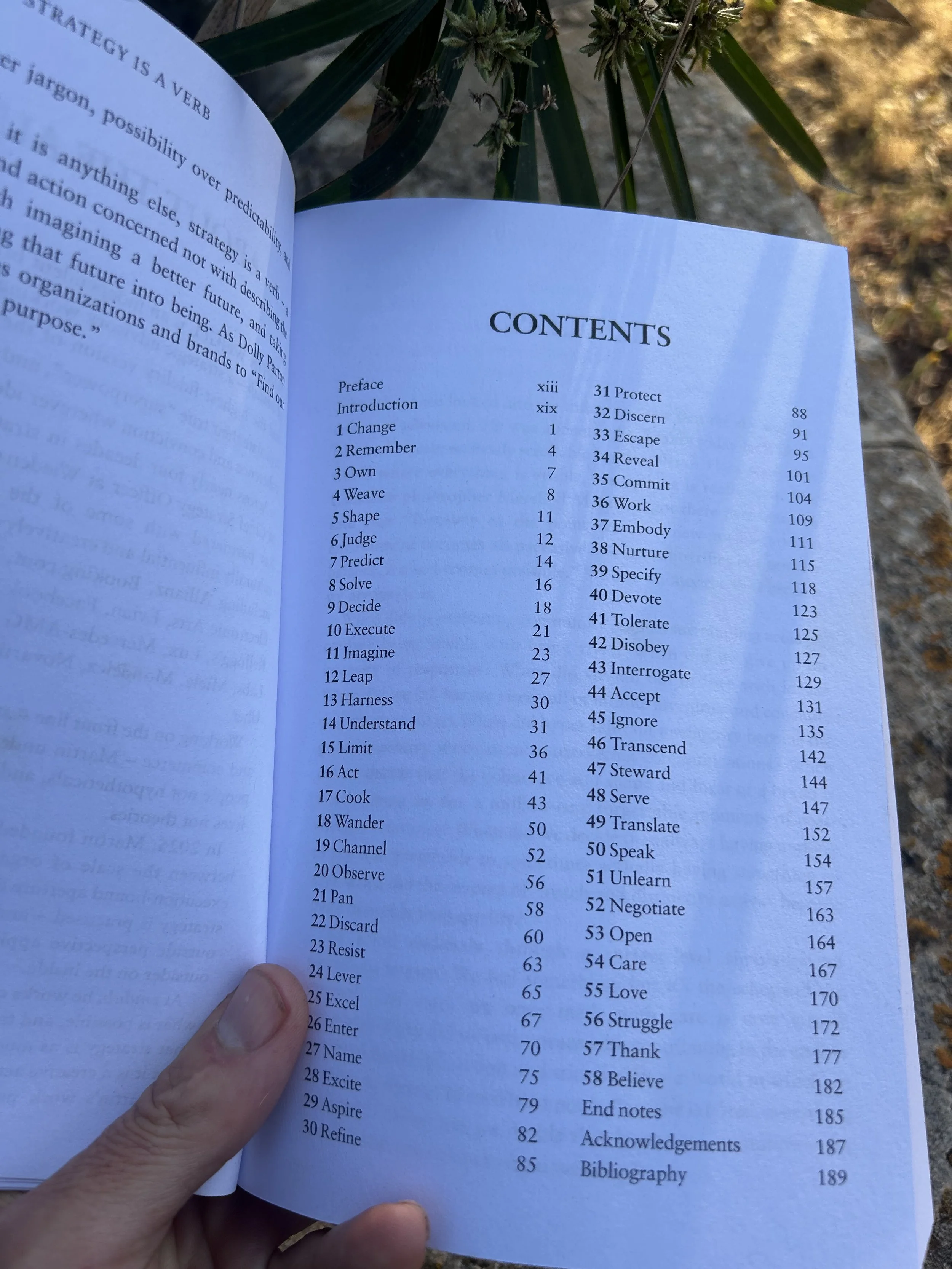
I am holding it in my hands right now. The first printed copy. My name on the cover. Pages.
For most of my career I have helped other people make things. I have shaped the thinking, sharpened the argument, pointed toward the idea. My name appears in the long lists of credits attached to the work I have been involved in — but it was never truly mine. Not all mine. I wanted, for once, to be the one who made the thing. Not the enabler. The creator. The owner. I wanted to find the words, string sentences together that held meaning — and weave them into something of my very own. That it ended up being about strategy was simply the excuse. Write about what you know, as the beginners’ advice goes.
A few years ago — this book has gone through many incarnations over many, many years — I took a call from the senior commissioning editor at Penguin while sitting in my mother's garden, surrounded by butterflies and the buzzing of bees. The feedback was basically to make it more like a generic business book — case studies, top tips, the usual. I understood. That is what the system needs it to be. But I had waited too long and come too far to compromise. I chose to self-publish — so that this book could be, for better or for worse, exactly what I wanted it to be, not what the system demanded.
There is something irreversible about a book. A "book". Please. It feels so strange to call it a book. One Hundred Years of Solitude is a book. Middlemarch is a book. To claim membership of that species feels audacious to the point of fraud. And yet — it has a spine, a cover, pages. It is, by any reasonable definition, also a book. Chopsticks to Rachmaninov's Second Piano Concerto. Though both for piano.
Nonetheless. Here it is. In my hands. And whatever else it is or isn't, it is permanent in a way a social or blog post never is — and arguably more immediately visible than much of a consultant's work. A book (hopefully) sits on a shelf, gets passed between people, gets argued with in margins, gets quoted back at you years later in contexts you never imagined. You cannot take it back. You cannot quietly go back and in the dead of night edit the version that didn't land. You put it into the world, and the world has it now.
A book then. Something that takes up space in the world. Barbara Hepworth said of sculpture that the sculptor carves because he must — that he needs the concrete form of stone and wood for the expression of his idea and experience. I know what she meant. In a world where so much of what we make is intangible or fleeting, there is something almost startling about an object you can hold. Something with weight and edges. Now in my hands, gravity tugs at the thing I made.
But the physical fact of the thing is only part of it. What nobody warned me about was what the making would do to the thinking. I have come to understand that creation is not merely expression — not the pouring out of what you already know and think and believe. It is something stranger and more unpredictable than that. It is how you find out. American writer and art collector Gertrude Stein understood this. Creation, she wrote, must take place between the pen and the paper — not before in a thought. You do not know what you are making until you are making it. E.M. Forster said “How do I know what I think until I see what I say?” Flannery O'Connor said the same thing more simply: "I write to discover what I know." The book that came out is not the book I had planned. It is the book the writing made.
The object is not the only thing that changed in the making. It's a modest volume about what is, in the grand scheme of things, the esoteric practice of brand strategy — not a timeless inquiry into the human condition. But I have come out of the process different. Certainly when it comes to my consulting practice, the making of it has given me more ambition, more clarity, and a sharper sense of what I am actually for. But there are other changes I cannot so easily inventory. Whatever I thought I was writing when I started, it wasn't quite this. And whoever I thought I was when I started, it isn't quite who I am now.
Its completion is reward enough. And I console myself with the truth that nobody remembers a bad book — and very few remember even the good ones.
Which leaves me, now that it's finally out in the world, haunted by a single question: what do I write next?
***
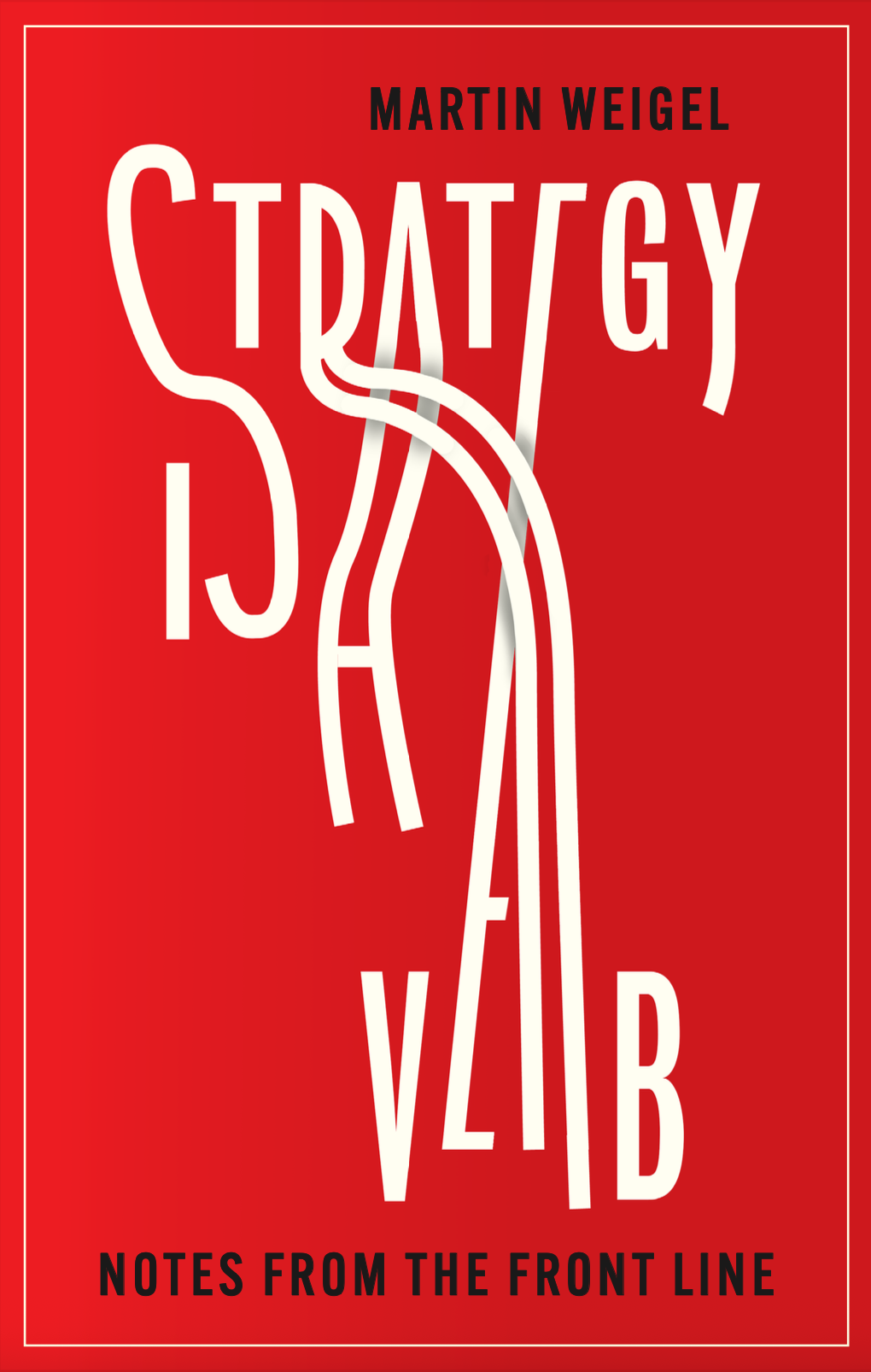
Martin Weigel is a brand strategist, former Chief Strategy Officer at Wieden+Kennedy Amsterdam, and founder of EMDUB. He helps companies find their superpower - and turn it into action.